



Iran Says US Sanctions Will Have ‘Severe Consequences’ for World Order
Error: Contact form not found.

 by Reuters and Algemeiner Staff

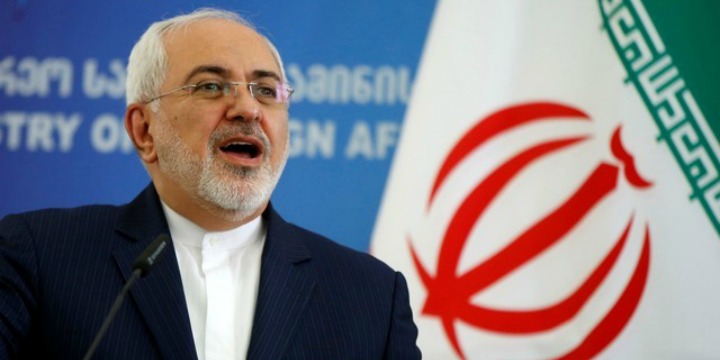
Iranian Foreign Minister Mohammad Javad Zarif speaks to the media in Tbilisi, Georgia, April 18, 2017. Photo: Reuters / David Mdzinarishvili.
US sanctions against Iran will have “severe consequences” for the world order, Iranian Foreign Minister Mohammad Javad Zarif said on Tuesday, days before new sanctions on Tehran’s oil exports take effect.
Washington reintroduced sanctions against Iran’s currency trade, metals and auto sectors in August after it pulled out from a multinational 2015 deal that lifted sanctions in return for limits on Iran’s nuclear program.
A new set of sanctions on Iranian banking and energy sectors are to take effect Nov. 5, as US President Donald Trump seeks to cut oil purchases from the Islamic Republic to zero.
“Unfortunately a law-breaking country (the United States) seeks to punish a country (Iran) that is abiding by law…. This method will have severe consequences for the world order,” Zarif was quoted as saying by the Iranian state news agency IRNA during a visit to Istanbul.
However, Zarif added, “Americans have not achieved their goals by imposing illegal sanctions against Iran.”
Tehran says it has complied fully with the nuclear accord and its commitment has been repeatedly confirmed by the UN atomic watchdog, International Atomic Energy Agency (IAEA).
Trump complained that the deal, approved by his predecessor Barack Obama, does not cover Iran’s ballistic missiles, its role in regional wars or what happens after the nuclear pact begins to expire in 2025.
“The world community has stood up to the US sanctions,” Zarif said, after a trilateral meeting between Iran, Turkey and Azerbaijan’s foreign minister.
“The neighboring countries and Europeans nations have resisted against Washington’s unilateral measures.”
European signatories of the nuclear deal are still committed to the accord and will soon launch a mechanism, a so-called special purpose vehicle (SPV), aiming to sidestep the US financial system by using an EU intermediary to handle trade with Iran.
South Korea, one of Asia’s biggest buyers of Iranian oil, said on Tuesday it has asked the United States for “maximum flexibility” on its request for a waiver to prevent South Korean companies from being affected by US sanctions.