








Hamas and Iranian Paymasters Are Fueling Violent Gaza Protests
Error: Contact form not found.

 by Steven Emerson

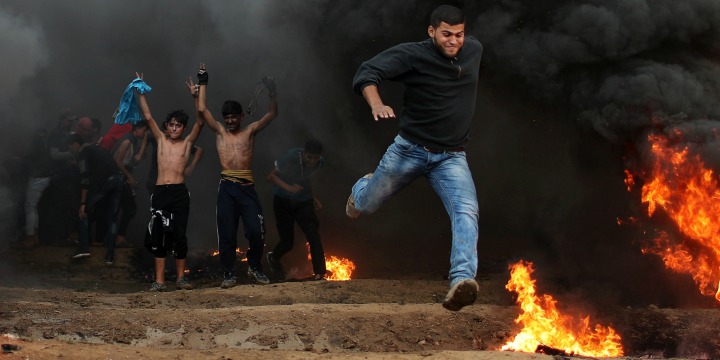
A Palestinian rioter on the Israel-Gaza Strip border, Oct. 26, 2018. Photo: Reuters / Mohammed Salem.
Iran and Hamas are fueling violent protests at the Israel-Gaza border by paying Palestinian youths to participate, and compensating injured Palestinians and families of those that get killed. This news comes directly from young Gazans who spoke with Israeli reporter Ohad Chemo.
Hamas pays $100 a month to youths who participate in the border protests that have continued unabated since the end of March, Chemo was told.
Hamas’ state patron, Iran, also pays $3,000 to each family of a “shahid” (martyr) who gets killed at the protest. Seriously wounded Palestinians get $500 from Hamas, while less severely injured rioters get $200. Even bus drivers who transfer the protesters to the Israeli border receive roughly $25 for a one-way trip.
Some Palestinians told Chemo that they disagreed with the Hamas strategy.
“If there would be work and income nobody would show up [to the demonstrations],” an older Palestinian said. Many protesters, he added, are members of the Hamas military wing.
“Hamas is the only group which profits from the violent demonstrations,” another Palestinian said.
Aid agencies and members of the international community routinely point to Israel’s blockade of Gaza as the source of the territory’s rising economic woes and sky-rocketing unemployment. But some of the Gazans interviewed admitted that Hamas’ strategy of prioritizing violent confrontation against Israel is directly hurting the local economy.
According to some of the locals, Hamas engages in widespread extortion on various essential goods. For example, as soon as a truck driver enters Gaza from the Keren Shalom border crossing, they are forced to pay roughly $140 to Hamas. Gasoline imports from Egypt and cigarettes are similarly taxed at high rates.
Some interviewees admitted that there have been minor strikes and protests against Hamas for these practices, but that the terrorist group’s militant wing quickly shuts down dissent with violent force. Others interviewed nevertheless expressed strong support for Hamas and its never-ending war against the Jewish state.
It has been proven that the vast majority of Palestinian fatalities during violent demonstrations on the Israel-Gaza border were members or affiliates of terrorist organizations — primarily Hamas.
These findings, supported by official statements from Hamas leaders, prove that Hamas always has been the driving force behind the deadly protests. Hamas also orchestrated several attacks at the border and continues to encourage the launching of incendiary kites and balloons into Israel that spark devastating fires.
Any attempts to portray the riots as “peaceful protests” defies the evidence, the statements of Hamas’ own leadership, and local Gazan insights.


