



Trump’s Decision to Pull US Troops Out of Syria Draws Lukewarm Israeli Response
Error: Contact form not found.

 by Barney Breen-Portnoy

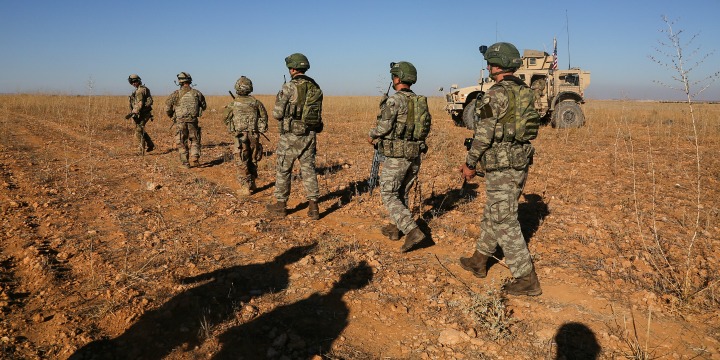
US and Turkish soldiers conduct the first-ever combined joint patrol outside Manbij, Syria, Nov. 1, 2018. Photo: Courtesy of Arnada Jones/ US Army / Handout via Reuters.
The Trump administration’s announcement on Wednesday that a withdrawal of US troops from Syria had begun drew a lukewarm response from Israel.
The news broke with a morning tweet by the president, which said, “We have defeated ISIS in Syria, my only reason for being there during the Trump Presidency.”
White House Press Secretary Sarah Sanders subsequently issued a fuller statement, explaining, “Five years ago, ISIS was a very powerful and dangerous force in the Middle East, and now the United States has defeated the territorial caliphate. These victories over ISIS in Syria do not signal the end of the Global Coalition or its campaign. We have started returning United States troops home as we transition to the next phase of this campaign.”
“The United States and our allies stand ready to re-engage at all levels to defend American interests whenever necessary, and we will continue to work together to deny radical Islamist terrorists territory, funding, support, and any means of infiltrating our borders,” she added.
Responding to this development, Israeli Prime Minister Benjamin Netanyahu stated, “I spoke with US President Donald Trump on Monday and with American Secretary of State Mike Pompeo yesterday. The American administration told me that it is the president’s intention to withdraw their forces from Syria. They made it clear that they have other ways of expressing their influence in the area.”
The Israeli leader continued, “This is, of course, an American decision. We will study its timetable, how it will be implemented and — of course — its implications for us. In any case we will take care to maintain the security of Israel and to defend ourselves in this area.”
According to Israeli media reports, Netanyahu had tried to dissuade Trump from the course of action.
In New York, Israeli UN Ambassador Danny Danon was asked by a reporter about the American move.
“It is a US decision, we respect any decision made by the administration,” Danon said. “We have our concerns about Syria — about the presence of Iranian troops in Syria – and we will do whatever is necessary to protect our people — regardless of American troops, Russian troops, or of any other nations. So we will continue to follow our policy of not allowing the Iranians to build their bases next to our borders.”
There are currently more than 2,000 US troops in northeastern Syria working with an alliance of Kurdish and Arab militias — known as the Syrian Democratic Forces (SDF) — in areas once held by ISIS, which has been greatly diminished as a fighting body.