



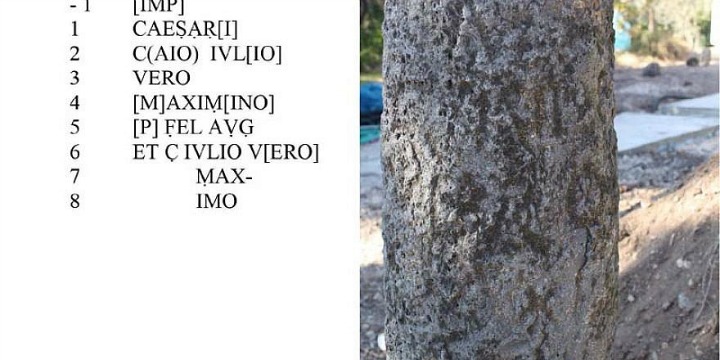
Upon discovery, Haifa University set about to decipher the Greek inscription chiseled into the item using state-of-the-art technology, but were unable to determine what it said. Ultimately, Dr. Gregor Stab from Cologne University was able to crack the riddle just last month, utilizing the simple, old-school method of paper rubbing.
Greek epigrapher Stab is a new member of an archaeological team engaged in a 20-year excavation of the Kinneret-region site of Sussita.
The new marker would have been placed somewhere between Sussita and the Golan.
Maximinus was born to an average Roman family around 173 C.E., and rose up through the ranks of the Roman army to lead the Italian Fourth Legion. He was elected emperor by the Praetorian Guard, an elite unit of the Imperial Roman army whose members served as personal bodyguards to the Roman emperors, in 235 C.E.
Just three years later, his troops deserted him while marching on Rome, and he and his son were executed by rebellious troops.


