





The US Is Right to Crack Down on Iran and the Revolutionary Guard Corps
Error: Contact form not found.

 by Joshua S. Block


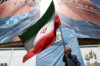
Members of Iran’s elite Revolutionary Guard, gather around the coffins of their fellow guards, who were killed by a suicide car bomb, during the funerals in Isfahan, Iran February 16, 2019. Photo: Morteza Salehi/Tasnim News Agency/via REUTERS.
In an unprecedented move earlier this month, the United States designated Iran’s Islamic Revolutionary Guard Corps (IRGC) a foreign terrorist organization. The shift in policy didn’t come a minute too soon — especially because the territorial expansion of Iran and its allies in the Middle East has brought the regime closer to Israel’s borders than ever before.
The IRGC has long served as Tehran’s driving vehicle for domestic oppression and the imposition of regional terrorism. On Sunday, Supreme Leader Ayatollah Khamenei appointed a new chief commander of the IRGC — Brig. Gen. Hossein Salami. He will be replacing Maj. Gen. Mohammad Ali Jafari, who has led the force since 2007. Salami is known for his hard-line rhetoric, and was recently quoted as saying that Iran will “break America, Israel, and their partners and allies.”
In no other country has the power of the IRGC and its overseas operations unit, the Quds Force, been so clearly felt as in Syria. Since the inception of the civil war there in 2011, Iran has been building up a permanent military presence in the country under the auspices of aiding the embattled Assad regime. From the beginning, Iran’s plan has been to turn Syria into a front-line post against Israeli and Western interests, and to maintain supply lines for a land bridge extending across Iraq and Syria, and into Lebanon.
Now that Assad’s position has stabilized, Iran appears to be aiming for more than just regime survival. In February, Salami said that Iran will fight Israel, the United States, and Arab allies “on the global level, not just in one spot.” He vowed that Tehran’s “war is not a local war. We have plans to defeat the world powers.”
The proscription of the IRGC-Quds Force by the United States is an accurate reflection of the threatening and destructive nature of the force. “The IRGC is the Iranian government’s primary means of directing and implementing its global terrorist campaign,” the White House said in a statement, explaining its decision to outlaw the group and its affiliates.
But the regime in Tehran was not the only audience for this message. Iranian-sponsored Hezbollah, the Shiite terrorist group that is in complete political and military control of Lebanon, has over 10,000 troops stationed in Syria. Together with the IRGC and local Shiite militia forces, Hezbollah played a critical role in the survival of the Assad regime.
The terrorist group is already threatening Israel from Lebanon, where Hezbollah has transformed hundreds of civilian villages into military strongholds in order to provoke mass casualties during their next war with Israel. Gen. Salami boasted in 2016 that Hezbollah has over 100,000 missiles in Lebanon, which are readied for the “annihilation” of Israel.
The Iranian leadership owes a great debt of gratitude to Western powers for bolstering its plan of linking Tehran, Damascus, Beirut, Baghdad, and Sanaa in a Shiite arc of influence.
Following the withdrawal of the United States from the 2015 nuclear accord, Washington reinstated sanctions that had been in place before the agreement was signed. On Monday, the White House took the final step in ending waivers that allowed eight countries to import Iranian oil without facing US sanctions as part of an escalating campaign to undercut Tehran’s illicit nuclear and non-nuclear activities.
In a statement, the White House said that the United States and its “allies are determined to sustain and expand the maximum economic pressure campaign against Iran to end the regime’s destabilizing activity threatening the United States, our partners and allies, and security in the Middle East.”
Given the growing military capabilities and territorial expansion of these hostile elements, the designation of the IRGC and its allies, as well as the enforcement of crippling sanctions on Tehran, are necessary steps to contain a regime that revels in its pariah status and happily terrorizes the world.
Joshua S. Block is president and CEO of The Israel Project.


