






University of Cape Town Senate Defers Vote on Israel Boycott, Calls for ‘Consultative Process’
Error: Contact form not found.

 by Shiri Moshe

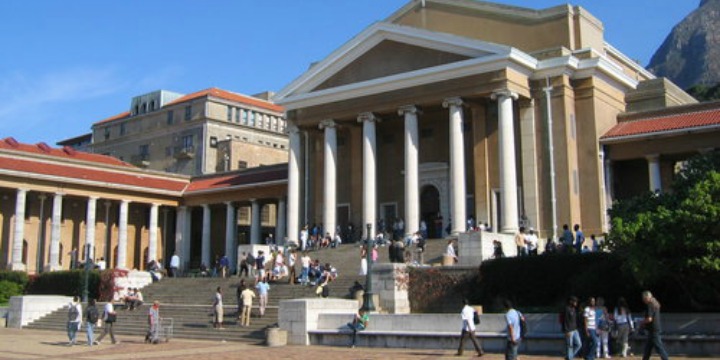
The University of Cape Town campus. Photo: Adrian Frith via Wikimedia Commons.
The Senate of the University of Cape Town in South Africa has deferred a vote on a boycott of Israeli academic institutions, agreeing to “a more consultative process on the proposal.”
The Senate considered the proposal on May 10th at the request of UCT’s top decision-making body, the Council, which decided in late March to hold off on its own vote while seeking clarification on “a number of issues.”
If enacted, the measure would bar UCT from entering into formal relationships with counterparts “operating in the Occupied Palestinian Territories” or, more ambiguously, “enabling gross human rights violations in the Occupied Palestinian Territories.”
The Senate previously endorsed such a boycott in mid-March, though it rejected a proposal — lobbied for by the Palestine Solidarity Forum (PSF) since 2017 — that called for a full boycott of all Israeli academic institutions in November.
In its latest meeting, the Senate “agreed that the UCT executive would determine how the consultation process” on the proposal should be carried out, according to a university statement on Thursday. “The UCT executive will work on the implementation of the consultation process.”
PSF and its supporters within the boycott, divestment, and sanctions (BDS) campaign say efforts to cut ties with Israeli institutions, academic and otherwise, are motivated by a desire to pressure the Jewish state to comply with international law and correct a historical injustice inflicted on Palestinians by its creation.
Critics, including the South African Jewish Board of Deputies and major Jewish groups worldwide, have strongly denounced the BDS campaign for rejecting the legitimacy of a Jewish nation-state anywhere in the Levant and advancing anti-Jewish tropes.
While the campaign has attracted some faculty and student support on college campuses worldwide, efforts by BDS supporters to implement academic boycotts within European and American universities have been largely unsuccessful, having been condemned by many leaders in higher education as violations of academic freedom.
UCT alumni who live in Israel and spoke to The Algemeiner ahead of the May 10th meeting warned that implementing an academic boycott would hurt the university’s standing — echoing concerns raised in 2017 by a prominent American law professor.