‘Reverse Tashlich’ Program Encourages Jews to Keep the Oceans Clean
Error: Contact form not found.

 by Shiryn Ghermezian / JNS.org

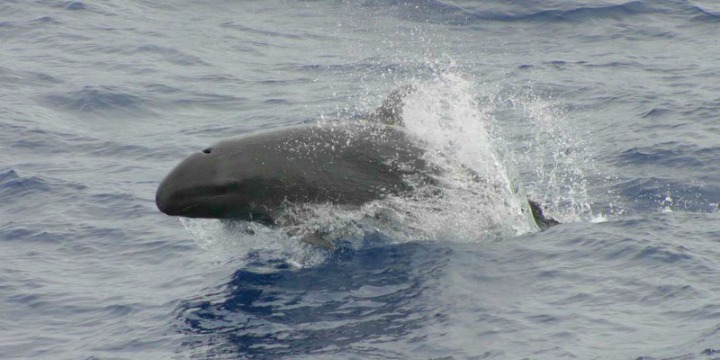
A body of water. Photo: National Oceanic and Atmospheric Administration via Wikimedia Commons.
JNS.org – A Florida-based program aimed at reconnecting Jewish people to the ocean and empowering them to help keep the sea clean is attracting attention from communities around the United States and even in Israel.
On Rosh Hashanah, Jews throw bread in the water to symbolically cleanse themselves of their sins. The “Reverse Tashlich” project calls on Jewish communities to switch the process and remove these human “sins” from the water in waterfront cleanups.
The project is part of the Tikkun HaYam (“repairing the sea”) initiative launched last year. It was founded by Rabbi Ed Rosenthal, also the founder of Scubi Jew, a Hillel club that teaches marine conservation through a Jewish lens as part of its mission of Tikkun HaYam.
As Rosenthal, who serves as the Hillel rabbi at Eckerd College in Florida, explained to JNS: “It applies a modern context to an ancient practice. In addition, it is intended to raise awareness about one of the greatest existential threats to our planet, the ongoing destruction of the ocean.”
Every year, approximately 6 million tons of human-made trash pollute the water.
“Reverse Tashlich” started as a small program at the Suncoast Hillel at Eckerd College in Tampa Bay, which has a large marine-science program and a beach on campus. Three years ago, about a dozen students went to their local waterfront and cleaned nearly 100 pounds of trash.
The program then expanded under the leadership of Shayna Cohen, director of Tikkun HaYam, and last year’s first annual event included nine locations and 307 participants. Some 650 pounds of trash were collected from Miami, Tampa Bay, and Washington, D.C.
The next event is scheduled for October 6; groups in Boston, Minnesota, California, New York, and Israel have expressed interest in participating. Cohen and her team are also hosting a grant competition for people who collect the most trash, as a way to incentivize locals to do “some really hearty cleanups,” she said.
“Our dream goal is having this one day a year where the Jewish community gets involved in their ecosystem and helps make an impact in their environment,” said Cohen. “As Jews, we are required to care for the environment, but there is a stark lack of environmentalism when it comes to the ocean and the Jewish community … a lack of awareness in the Jewish community for marine conversation. Tikkun HaYam is just a way to bring the topic of the ocean into the conversation.”
Ahead of October’s event, individuals or team leaders can register their location on the “Reverse Tashlich” website, which is added to the public page so people can join. Participants then get in touch with each other to schedule a meetup, and Cohen provides coaching, guide books, and online seminars to help organize things ahead of the event. The sign-up is open to everyone.
“We want anybody to feel empowered to make a difference in the ocean,” said Cohen.
According to Rosenthal, many mitzvot apply to the environment, such as Bal Tashchit, the prohibition against needless and unnecessary waste and destruction. He discusses “Water Torah” in great length on the Tikkun HaYam website, citing texts that describe “the deep Jewish connection to the sea and the profound spiritual nature of water” and how the Torah calls upon Jews to care for the ocean.
Tikkun HaYam’s goal is to show there is a Jewish connection to the sea, and its name is connected to the Jewish concept of tikkun olam, the repair of the world.
Rosenthal said, “We call it ‘Tikkun HaYam’ because people, especially Jews, have a tendency to forget that even though they may speak of going ‘green’ to save the environment, we actually live on a blue planet. The ocean makes up 71 percent of the planet. It produces more oxygen than all of the rainforests and trees in the world combined.”
“Water is the most unifying force in the world,” he continued. “Every living organism from a worm to a whale, from a weed to a towering oak tree, from an amoeba to man — everything is made up mostly of water. … Water is the source of life. If the ocean dies, we die. I can’t think of a more tikkun olam effort than that.”