






Pentagon Chief Defends Trump After Traumatic Brain Injury Comments
Error: Contact form not found.

 by Reuters and Algemeiner Staff

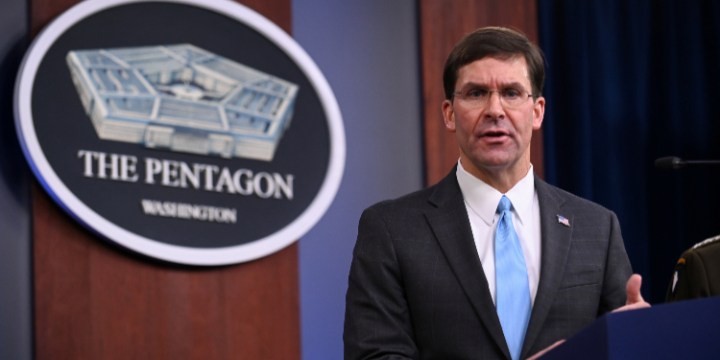
US Defense Secretary Mark Esper addresses reporters during a media briefing at the Pentagon in Arlington, Virginia, Oct. 11, 2019. Photo: Reuters / Erin Scott.
US Defense Secretary Mark Esper on Thursday defended President Donald Trump’s response to American troops’ being diagnosed with traumatic brain injuries from Iran’s missile strike, saying he cared about the service members, as the number of service members diagnosed increased to 64.
Last week, Trump appeared to play down the injuries, saying he “heard that they had headaches and a couple of other things,” prompting criticism from lawmakers and a US veterans group.
Of the 64 service members who have been diagnosed, 39 had returned to duty, the military said.
“I’ve had the chance to speak with the president; he is very concerned about the health and welfare of all of our service members, particularly those who were involved in the operations in Iraq, and he understands the nature of these injuries,” Esper said during a news conference on Thursday.
Army General Mark Milley, chairman of the military’s Joint Chiefs of Staff, said the service members suffering from traumatic brain injuries had been diagnosed with mild cases. He added the diagnosis could change as time went on.
Pentagon officials have said there had been no effort to minimize or delay information on concussive injuries, but its handling of the injuries following Tehran’s attack has renewed questions over the US military’s policy regarding how it deals with suspected brain injuries.
“(Traumatic brain injury) manifests itself over time. … I still believe that morning there were no casualties reported,” Esper said.
Since 2000, about 408,000 service members have been diagnosed with traumatic brain injury, according to Pentagon data.
Iran fired missiles at the Ain al-Asad base in Iraq in retaliation for the US killing of a top Revolutionary Guard general, Qassem Soleimani, in a drone strike near Baghdad International Airport on Jan. 3.
The missile attacks capped a spiral of violence that had started in late December. Both sides have refrained from further military escalation.