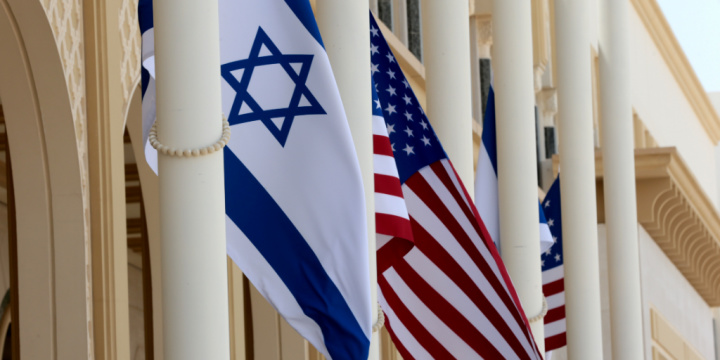
Netanyahu and Pence Discuss US-Israel Scientific Cooperation on Coronavirus Outbreak
Error: Contact form not found.

 by Benjamin Kerstein


US Vice President Mike Pence speaks with Israeli Prime Minister Benjamin Netanyahu during a meeting in Jerusalem, Jan. 22, 2018. Photo: Reuters / Ariel Schalit / Pool.
Israeli Prime Minister Benjamin Netanyahu spoke by phone with US Vice President Mike Pence on Sunday to discuss the escalating spread of the coronavirus.
The two leaders spoke about US-Israel “technological and scientific” cooperation in order to fight the virus, the Prime Minister’s Office said in a statement.
Talks will now be held between the Israeli and American government task forces charged with dealing with the coronavirus, including the White House coronavirus coordinator Dr. Deborah L. Birx, the statement said.
Israel is currently considering a ban on travelers from the various states, including Washington, California and New York, where coronavirus cases have been confirmed, which has led to rumors that a blanket ban on US flights is in the offing.
Netanyahu, however, is reportedly concerned that such a ban could have an adverse effect on the US-Israel relationship.
An anonymous source on Israel’s coronavirus task force told Israeli news website N12, “The prime minister does not want a confrontation with the Trump administration, and thinks such a move would upset the president.”
Israel’s current travel restrictions, said the official, would justify the US receiving “the same treatment as the other countries already on the list, but in spite of that, the prime minister doesn’t want to confront Trump.”
The Israeli government, he added, believes “we have to consider the supply lines between Israel and the US.”
The Prime Minister’s Office contradicted the official’s claims, saying the travel restrictions are assessed on a professional basis only.
Israel’s policies in response to the virus, including extensive travel bans and quarantines, have received some criticism in recent days, with opponents calling them too severe.
Dr. Eyal Leshem, an infectious disease specialist at Israel’s Sheba Medical Center in Tel HaShomer, however, disagrees.
“If we do not take these measures, and the hospitals are inundated with the severely ill — then we will be in an apocalyptic scenario,” he told N12.
“Since the health system is taking these steps now, we will be able to cope,” he said. “There will be difficult cases and the doctors will be overloaded, but we will overcome this.”
However, he said, “The most extreme measures have not been taken. We still haven’t diagnosed a single case in this country that wasn’t known to us [beforehand]. That said, as soon as that case arrives, the intensity of the struggle will rise.”