









Iran Rejects UN Report That Arms ‘of Iranian Origin’ Used in Saudi Attacks
Error: Contact form not found.

 by Reuters and Algemeiner Staff

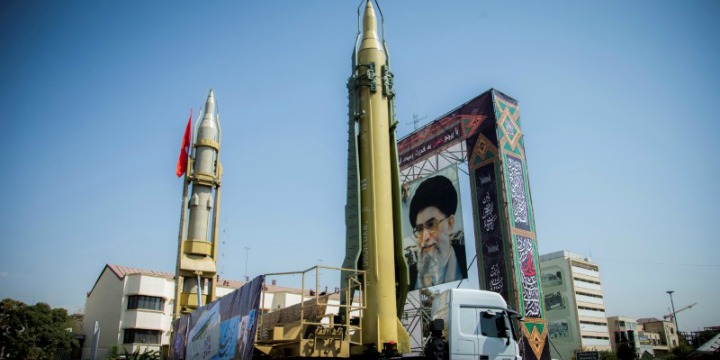
A display featuring missiles and a portrait of Iranian Ayatollah Ali Khamenei is seen at Baharestan Square in Tehran, Sept. 27, 2017. Photo: Nazanin Tabatabaee Yazdi / TIMA via Reuters.
Iran on Friday rejected a United Nations report that said cruise missiles used in attacks on oil facilities and an airport in Saudi Arabia last year were of “Iranian origin,” saying it had been drawn up under US and Saudi influence.
In the report, seen by Reuters on Thursday, UN Secretary-General Antonio Guterres also told the Security Council that several items in US seizures of weapons and related materiel in November 2019 and February 2020 were “of Iranian origin.”
Iran‘s Foreign Ministry said in a statement carried by state media that “Iran denies allegations by the UN Secretariat that appear to have been made under political pressure from the US and Saudi regimes.”
“Interestingly, the … report comes at a time when the United States is working to draft a dangerous resolution to extend an arms embargo against Iran,” the statement said.
Iran on Wednesday called on Russia and China to resist a push by Washington to extend a UN-imposed arms embargo that is due to expire in October under Tehran’s 2015 nuclear deal with six world powers.
US President Donald Trump withdrew Washington from the deal in 2018 and his administration has been taking a harder line with the United Nations to extend and strengthen the embargo on Iran, saying lifting it would let Tehran acquire weapons that could fuel conflicts in the Middle East.
Guterres said that in a May 22 letter, Iran‘s UN envoy said “it has not been the policy of Iran to export weapons in violation of relevant arms embargoes of the Security Council” and that it will “continue to actively cooperate with the United Nations in this regard.”
US Ambassador to the UN Kelly Craft has said she will circulate a draft resolution to extend the arms embargo on Iran soon. If Washington is unsuccessful, it has threatened to trigger a return of all UN sanctions on Iran under the nuclear deal, even though it quit the accord. Diplomats say Washington would likely face a tough, messy battle.


