New US Sanctions Target Assad’s Son, Syrian Army Unit
Error: Contact form not found.

 by Reuters and Algemeiner Staff

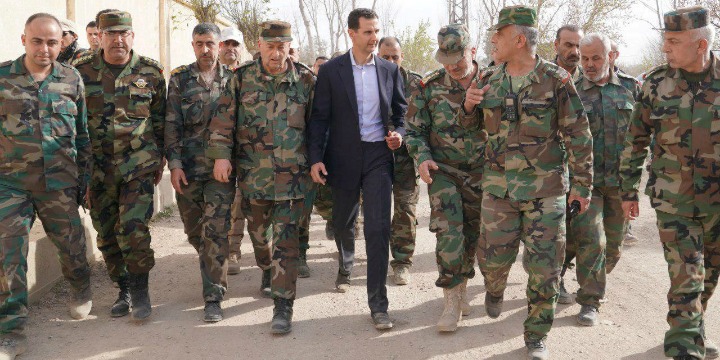
Syrian President Bashar al-Assad walks with Syrian Army soldiers in eastern Ghouta, Syria, March 18, 2018. Photo: SANA / Handout via Reuters.
The United States on Wednesday imposed fresh sanctions aimed at depriving the Syrian government of funds, and warned that Washington would blacklist anyone doing business with President Bashar al-Assad’s government until he supports a negotiated end to the country’s nearly decade-long war.
Among the 14 blacklisted Wednesday were Assad’s son, Hafez, a Syrian businessman and nine entities a senior US official accused of helping to fund the Syrian government’s “campaign of terror,” as well as the Syrian Arab Army’s First Division unit, among others.
“The steady drumbeat of designations on persons and entities that support the Assad regime will continue until the regime and its associates cease obstructing a peaceful political resolution of the conflict” as called for by the UN Security Council, a senior US official told reporters.
The sanctions, imposed under the Caesar Syria Civilian Protection Act and other measures, come as the Syrian leader grapples with a deepening economic crisis after a decade of war.
It marks the second round of sanctions imposed by the Washington under the Caesar Act, which aims to deter “bad actors who continue to aid and finance the Assad regime’s atrocities against the Syrian people while simply enriching themselves.”
“It is time for Assad’s needless, brutal war to end. This, above all, is what our sanctions campaign is meant to bring about,” US Secretary of State Mike Pompeo said in a statement.
Already, US and European Union sanctions have frozen the assets of the Syrian state and hundreds of companies and individuals. Washington has banned American exports to and investment in Syria, as well as transactions involving oil and hydrocarbon products.
The new sanctions cover many more sectors, and they can freeze assets of anyone dealing with Syria, regardless of nationality. The measure also targets those dealing with entities from Russia and Iran, Assad’s main backers.
Syrian authorities blame Western sanctions for widespread hardship among ordinary residents, where the currency collapse has led to soaring prices and people struggling to afford food and basic supplies.