



Pandemic Adds to War in Keeping Libyan Children Out of School
Error: Contact form not found.

 by Reuters and Algemeiner Staff

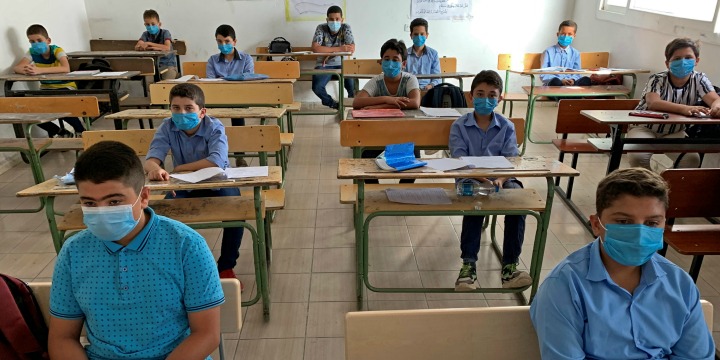
Students wearing protective face masks maintain social distancing as they attend a class after some schools reopened amid the coronavirus disease (COVID-19) crisis, in Misrata, Libya October 4, 2020. Picture taken October 4, 2020. Photo: REUTERS/Ayman Al-Sahili.
Their young lives already disrupted by war, Libyan schoolchildren face even bigger obstacles to their education during the global pandemic than young people elsewhere.
With the number of cases surging unhindered across the North African country, schools have tried different tactics from opening outside to seeking donations for extra disinfectants and facemasks to allow teaching indoors.
However, even those who have had no teaching for six months, or much prospect of it during the rest of this year, will have to pass an exam in order to progress to the next grade, the authorities have said.
“Students did not study anything. We did not teach anything for the students to learn. This is not a solution,” said teacher Amal Qleiwan, who is also the mother of a 10-year-old.
“The decisions by the ministry of education are random and are not studied well.”
University professor Ahmed Falaq is home schooling his two children, aged 10 and eight, and his two nephews, aged 12 and 10.
“What will students do if there is a new wave of coronavirus? They will miss two years of their education. This is a big problem for parents and the students. We will have a generation of students with weak education,” he explained.
Libya now has more than 41,000 cases of the coronavirus, though with war-related chaos across much of the country, officials admit there are probably many more going undetected. The United Nations has said the situation is “spiraling out of control.”
Meanwhile, according to UN estimates, the fighting in Libya has already displaced more than 150,000 people, 90,000 of whom are children, and closed 200 schools, depriving more than 200,000 children of their schooling.
As the pandemic started to rage through Libya since August, medics working in the war-ravaged country’s few functioning hospitals faced their nightmare scenario — a surge in cases and dwindling resources.