





Israel Extends Lockdown Until Jan. 31 Amid Rising COVID-19 Infection
Error: Contact form not found.

 by JNS.org

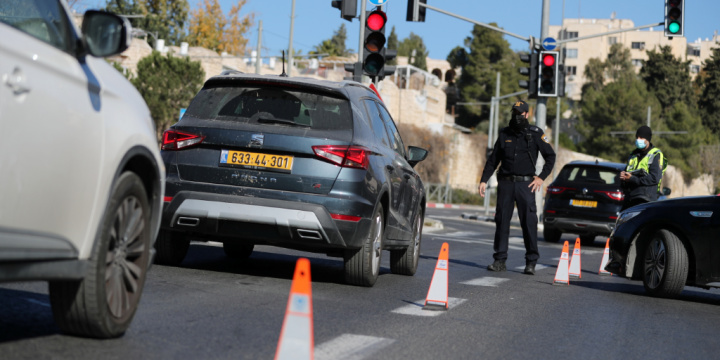
Police officers wearing face masks stand at a police checkpoint, as Israel tightens a national lockdown in a bid to curb a sharp rise in new coronavirus disease (COVID-19) infections, in Jerusalem January 8, 2021. Photo: REUTERS/Ammar Awad.
JNS.org – The Israeli Cabinet voted on Tuesday to extend the country’s current coronavirus lockdown for an additional 10 days, until Jan. 31, and impose tighter restrictions on travelers entering the country, the Prime Minister’s Office and Health Ministry announced in a joint statement.
The extension is scheduled to begin Thursday night, when the current lockdown was slated to end. Israel’s current and third national COVID-19 lockdown began on Dec. 27, but restrictions were tightened on Jan. 8 as morbidity continued to rise, with the Health Ministry confirming the presence in the country of both the UK and South African variants of the virus.
According to the new travel restrictions, which are scheduled to begin on Jan. 23, anyone entering Israel will have had to present airline personnel in the country of origin with confirmation of a negative coronavirus PCR test taken within 72 hours ahead of take-off—or Health Ministry documentation of the traveler’s having recovered from COVID-19 or having been vaccinated.
As of Wednesday morning, 1,142 new coronavirus cases had been identified in the country, according to the Health Ministry, and a total of 2,261,843 Israelis had received the first dose rose of the vaccine, representing 25.45 percent of the population. A total of 540, 406 had received the second dose, or 6.08 percent of the population, according to the Health Ministry.
According to the results of a serological study conducted by Tel Aviv’s Sheba Medical Center at Tel HaShomer published on Monday, more than 98 percent of the people who received both doses of the COVID-19 vaccine developed antibodies that neutralize the virus.
The study tested subjects for antibodies a week after they received their second dose. Out of the 102 tests analyzed, researchers saw the level of antibodies jump by factors ranging from six to 20—even higher than the level of antibodies measured in recovered COVID-19 patients who had been seriously ill.
Israel kicked off its vaccination campaign last month with members of the over-60 population receiving the first dose. The age group was lowered to those above the age of 55 and then 50 in the weeks that followed. On Tuesday, the Health Ministry lowered the age to 40.


