






Iran’s Spy Chief Says Tehran Could Seek Nuclear Arms If ‘Cornered’ by West
Error: Contact form not found.

 by Reuters and Algemeiner Staff

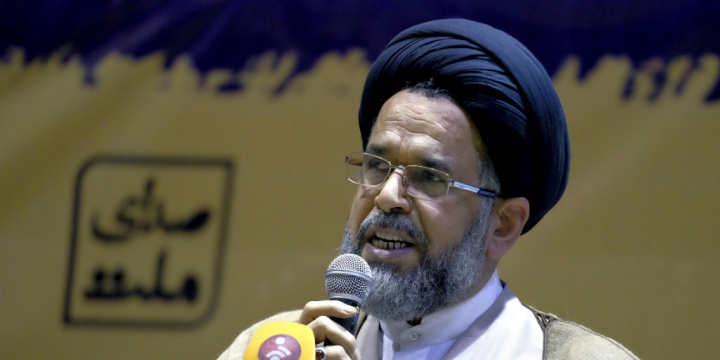
Iran’s Minister of Intelligence Mahmoud Alavi, a candidate for upcoming vote on the Assembly of Experts, speaks during a campaign gathering of candidates mainly close to the reformist camp, in Tehran February 23, 2016. REUTERS/Raheb Homavandi/TIMA
Iran’s intelligence minister said persistent Western pressure could push Tehran to fight back like a “cornered cat” and seek nuclear weapons, which the Islamic Republic has for years insisted it has no intention of ever developing.
The remarks made in a television interview are a rare explicit suggestion that Iran might have an interest in nuclear weapons, which Western nations have accused Iran of pursuing.
Iranian officials have repeatedly dismissed this charge, citing a fatwa or religious decree issued in the early 2000s by the Islamic Republic’s top authority, Supreme Leader Ayatollah Ali Khamenei, that bans the development or use of nuclear arms.
The United States and the other Western powers which originally signed up to a 2015 nuclear deal with Iran appear to be at an impasse over which side should return to the accord first, making it unlikely US sanctions that have crippled its economy will be quickly removed.
“The Supreme Leader has explicitly said in his fatwa that nuclear weapons are against sharia law and the Islamic Republic sees them as religiously forbidden and does not pursue them,” the minister, Mahmoud Alavi, told state TV.
“But a cornered cat may behave differently from when the cat is free. And if they (Western states) push Iran in that direction, then it’s no longer Iran’s fault,” Alavi said in the interview broadcast late on Monday.
Details from the interview were published by Iranian news websites on Tuesday.
Iran has insisted its nuclear program is to generate power and for other peaceful purposes. But US intelligence agencies and the United Nations nuclear watchdog believe Iran once had a nuclear weapons program that it halted.
US President Joe Biden’s administration is exploring ways to restore the 2015 nuclear deal that Iran signed with major world powers but that was abandoned in 2018 by former President Donald Trump, who restored sanctions. Iran retaliated by breaching the terms of the accord in a step-by-step response.
Biden has said that, if Tehran returned to strict compliance with the pact, Washington would follow suit, using that as a springboard to a broader agreement that might restrict Iran’s missile development and its regional activities.
Tehran has insisted that Washington must first ease sanctions before it resumes compliance. It has ruled out any negotiations on wider security issues.


