




The IDF Thinks Iran Should Sweat, Not the US
Error: Contact form not found.

 by Yoav Limor / JNS.org

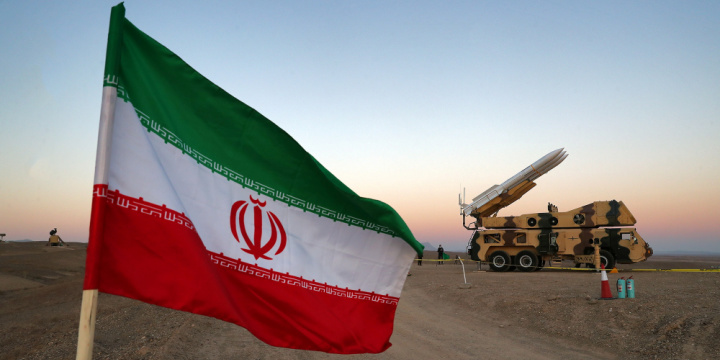
An Iranian flag is pictured near a missile, during an Iranian military drill, Oct 19, 2020. Photo: WANA (West Asia News Agency) via Reuters.
JNS.org – It is possible to look at the annual threat assessment report published by the IDF Military Intelligence Directorate (Aman) on Tuesday in two ways.
Optimistically, whereby Israel’s enemies, chief among them Iran, are very far from where they’d hoped to be at this point in time. And pessimistically, whereby the threats facing Israel have not diminished, and in many ways have even intensified recently.
We can assume Aman chief Maj. Gen. Tamir Hayman would like a third way of looking at things: realistically. On one hand, not everything is doom and gloom, and the region is not only full of threats but also opportunities. However, this is still the Middle East, and although 2020 was a relatively calm year, nothing on the horizon promises a similar future.
As in recent years, Iran continues to be the almost exclusive source of regional mayhem. While the Islamic State is still alive and kicking (mainly in Syria), along with al-Qaeda (in Iraq and Afghanistan), Tehran is responsible for most of the damage. Its machinations had to be adjusted to the reality forced on it—primarily following the assassination of Qassem Soleimani, which severely hindered Iran’s strategic endeavors and its operative-tactical performance—but the direction remains unchanged. It wants to expand its sphere of regional influence via its proxies, which it uses to fight its enemies. This is the case in Yemen versus the Saudis and Emiratis, in Iraq against the Americans, Saudis and Sunnis, and it is the case in Syria and Lebanon against Israel.
This Iranian activity has slowed significantly due to the dire economic situation in Iran, which is mainly the result of the crippling sanctions imposed by the United States. This “maximum pressure” campaign was mainly meant to target Iran’s nuclear program, but the IDF is concerned that Tehran will simply funnel more funds and weapons to its proxies across the region to compensate for the sanctioned nuclear program.
On the nuclear front, Aman is actually less troubled. In its assessment, Iran wants to return to the nuclear deal, and its recent moves are aimed at accumulating bargaining chips to use in expected negotiations with the Americans. The odds of Iran making a surprise breakout to a bomb are exceedingly low and regardless, doing so would require at least two years.
This assessment is less alarmist than what we heard last week from Washington, where US Secretary of State Tony Blinken warned that Iran was “weeks away” from a nuclear breakout. This is far from being a semantic debate; not just because the West needs to make sure it isn’t caught off guard, but because its countermeasures against Iran need to be extrapolated from it.
While the significance of the American claim is that time is of the essence and therefore agreements must be reached with Iran as soon as possible, Israel maintains that quite a bit of time still remains. In other words, there’s no reason to renew the old, bad nuclear deal, and this time could be better utilized to secure a better deal that addresses the holes in the original one. That is to say, Aman believes the Iranians should be made to sweat, not the Americans.
Reading between the lines, the right way to make this happen, Aman believes, is through discreet diplomacy with the US administration, as opposed to IDF chief Lt. Gen. Aviv Kochavi’s public statements. This is the first sign of professional (and healthy) disagreement within the IDF’s high command, and it’s good that Hayman is voicing a differing view, as his job requires.
We mustn’t mistake the Military Intelligence assessment as choosing the easy way to avoid a war. Just the opposite: The intelligence it provided over the past year (and will continue to provide over the coming year) is the main driving force behind all Israeli operations, for every agency, on all fronts. As it pertains to the strategic matter of handling Iran’s nuclear program, however, Aman understands that the path runs through Washington and that the price of making a wrong turn could cost Israel on all fronts.
Yoav Limor is a veteran Israeli journalist and columnist for Israel Hayom.
This article first appeared in Israel Hayom.


