







Coronavirus Protests Fuel Yet Another Annual Rise in Antisemitic Outrages in Germany
Error: Contact form not found.

 by Ben Cohen


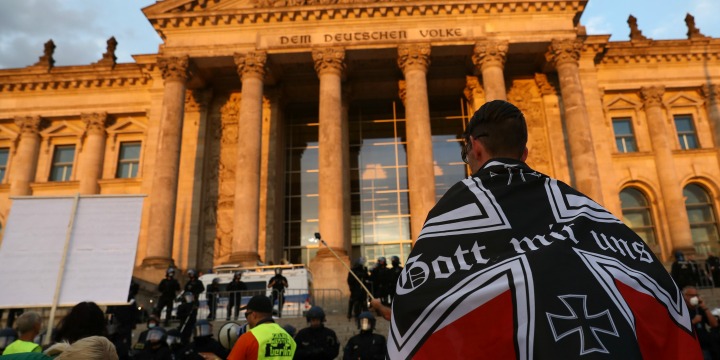
Protesters demonstrate in front of the Reichstag, during a rally against government restrictions related to the coronavirus (COVID-19) pandemic, in Berlin, Germany, Aug. 29, 2020. Photo: Reuters / Christian Mang.
Germany registered another spike in the number of antisemitic hate crimes committed during 2020, with conspiracy theories about the COVID-19 pandemic spurring much of the venom directed at the Jewish community.
According to German federal government figures released on Thursday, at least 2,275 crimes with an antisemitic background were logged over a 12-month period ending in January 2021. Some 55 of those outrages were acts of violence.
However, only five suspects were detained by the authorities, despite police investigating 1,367 cases. No arrest warrants have been issued.
The data gathered in 2020 maintained a decade-long trend of the number of antisemitic offenses rising in Germany each year. Although the 55 violent assaults were a decrease on the 72 that were recorded in 2019, that change was mainly caused by social distancing protocols making public encounters less frequent.
Josef Schuster — president of the Central Council of Jews in Germany — told the daily Tagesspiegel that he had not been surprised by the news of a further increase in antisemitic offenses.
“In view of the numerous anti-Semitic incidents at the coronavirus-denier protests last year and the conspiracy myths online, it was, unfortunately, to be expected that the number of anti-Semitic crimes would rise again,” Schuster said.
Schuster said that the federal government’s figures showed that “the radicalization of society is progressing and respect for minorities is declining.”
The federal government’s antisemitism commissioner, Felix Klein, emphasized the presence of antisemitic tropes in demonstrations against the coronavirus restrictions staged by right-wing groups like “Querdenken.”
“In the course of these protests, the limits of what can be said have shifted, the Shoah has been relativized and well-known antisemitic hate images revived,” Klein said.
The government’s figures were released on the same day that leaflets blaming Jews for the pandemic were discovered on a tram in the city of Cologne.
The leaflets asked “Do we really have a Corona problem? Or do we have a Jewish problem?” with a Star of David in the background alongside the names of three German leaders — Chancellor Angela Merkel, Health Minister Jens Spahn, Minister of Foreign Affairs Heiko Maas — and the prominent virologist Christian Drosten. None of these individuals is Jewish.


