






Parshat Lech Lecha: No One Is Perfect
Error: Contact form not found.

 by Jeremy Rosen

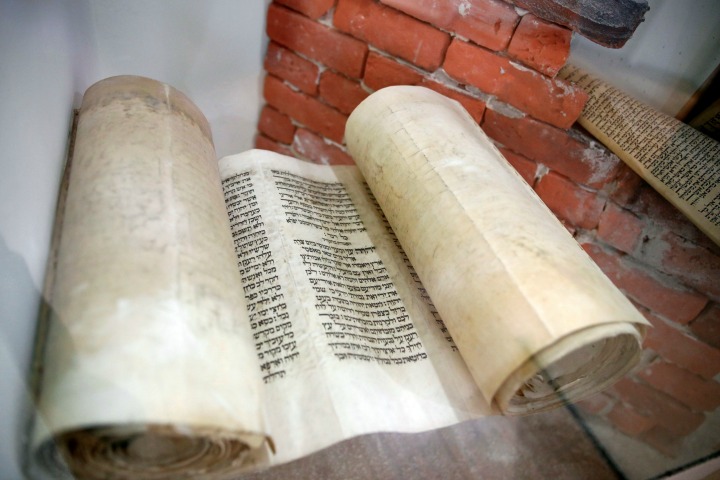
A Torah scroll is seen on display at the Babylonian Jewry Heritage Center in Or Yehuda, Israel, April 16, 2018. Photo: Reuters / Amir Cohen.
Abraham is the first, full character study in the Torah. The “ten generations” between Adam and Noah, and then again between Noah and Abraham, are symbolic of a gradual moral and spiritual improvement that takes time — from the earliest attempts of humanity to understand the universe and its powers, through the inevitable struggle between good and evil that is built into the human being.
Judaism’s main characters are not portrayed as perfect. “ The Torah was not given for angels,” says the Talmud.
We see Abraham struggling with decisions that affect his wife and concubine, his relatives, and the people he encounters. We can see the good and the not-so-good. At the same time as Abraham struggles with humans, he struggles with God, too. Despite Divine promises, everything goes wrong. There is famine, foreign rulers to accommodate, and corrupt societies. If God promises, why does it take so long to come true? Where does one draw the lines? What are the limits? Where do human affairs and Divine commands and decisions overlap?
All of this makes Abraham such a relatable and vulnerable human being. We can relate to him. And this speaks to the fact that on both spiritual and behavioral matters, the Torah is speaking to us all.
I always wondered why the rabbis of the Midrash and Talmud went out of their way to portray Abraham, and indeed many other Biblical characters, as perfect — inerrant ciphers, glossing over or excusing what seem to us to be the morally questionable decisions. Why, after the Torah implies a gradual improvement, does the Talmud believe that our generations have diminished morally and intellectually?
My guess is that given the Christian and Muslim tendency to make their primary characters to be Divine or saintly, the rabbis of those times did want our traditional examples to be seen as any less perfect than theirs. And as oppression of the Jews and cruelty increased in their times, they had every reason to think this of humanity.
At the same time, there are always exceptions. The story of Malchizedek (for some reason, Christian translations call him Melchizedek) describes a person, a priest to El Elyon, who came out to greet Abraham when he returned exhausted from the battle to rescue his nephew. The priest brought him bread and wine, and blessed Abraham in the name of God. Abraham then donated tithes to him.
This mutual respect is so significant. It emphasizes that there were (and are) other good, moral people outside of Abraham’s circle. For good reasons, the recent normalization agreements between some Arab, Muslim countries and Israel are called the Abraham Accords. While we fight to protect our values and our heritage, we should never forget — that even if much of the world is against us — we do not stand alone, so long as we stand strong.
The author is a writer and rabbi, currently living in New York.


