


Shabbat Vayera: Not Lot
Error: Contact form not found.

 by Jeremy Rosen

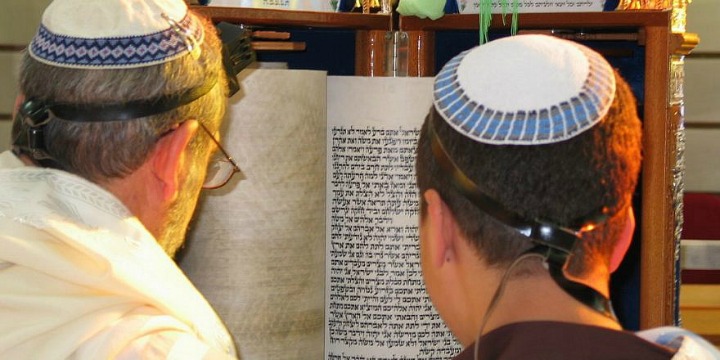
Reading from a Torah scroll in accordance with Sephardi tradition. Photo: Sagie Maoz via Wikimedia Commons.
Lot does not seem to be a very nice person. His uncle (and brother-in-law) Abraham takes him under his wing, after Lot’s father dies, and they reach Canaan. Together, the two are forced by famine to go down to Egypt, where they both prosper. On their return, there is tension between Lot’s shepherds and Abraham’s, and they agree to part company.
Lot is given the choice, and decides to move down towards the cities of Sodom and Gomorrah, despite their reputation for venality. Lot gets caught up in a struggle between warring kings and is captured. Abraham rescues him.
This week’s reading concerns the destruction of the corrupt cities — Sodom and Gomorrah — and the moral decline of Lot. Whereas Abraham was always known for his hospitality, the people of Sodom had no regard for strangers. When visitors came to Lot, he welcomed them; therefore, something of Abraham’s values still remained. The men of Sodom gathered around Lot’s house demanding he hand over two angels, who were visiting him. Lot refused, but in an amazingly cruel way, he offered his two daughters to the mob instead. Luckily, the angels intervened.
Sodom was destroyed. Lot’s wife was turned into a pillar of salt, and Lot and his two daughters escaped up the mountains. Looking back at the devastation, the daughters think, mistakenly, that the rest of the world has been destroyed. As the lone survivors, they want to keep mankind alive through their father. They get him drunk — first the elder and then the younger. Was he complicit, twice? There are different opinions in the Midrash as to whether the girls or Lot took the initiative.
What is the Torah telling us with this very strange narrative? That however good a person is, society can exercise a highly destructive influence, and distort one’s moral judgment. Lot may have started as a good man, taught by Abraham. The rabbis even say that he was shocked by Abraham’s treatment of Sarah. But the further he moved away from Abraham, the more he was influenced by the corruption of Sodom. He lost his moral compass, and that influenced his family accordingly.
Today, more than ever, we are so susceptible to outside, social influences, and mob rule, from corporations to universities. We — and even more so, our children — can easily slip down the ladder of moral values. We must be strong and choose the right company and values instead of the easiest and the lowest.
The author is a writer and rabbi, currently based in New York.


