








Israeli Nanodrug ‘Attacks Cancer Twice’ by Boosting Chemotherapy Effects and Immune System
Error: Contact form not found.

 by Sharon Wrobel

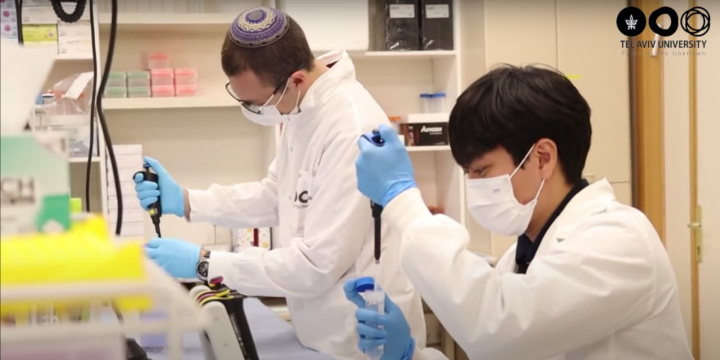
Researchers at Tel Aviv University’s Laboratory of Precision Nanomedicine. Photo: Tel Aviv University
Israeli researchers have developed a nanodrug delivery system that they say can pull double duty against cancer, by both boosting the effectiveness of chemotherapy and bolstering the immune system.
Scientists at Tel Aviv University claim that the drug delivery system, based on lipid nanoparticles using RNA technology, has the potential to change how patients are treated against cancer by improving the “poor” responsiveness to chemo-immunotherapy.
“Chemo-resistant tumors pose a significant challenge in our endless battle against cancer,” stated Prof. Dan Peer, Head of the Laboratory of Precision Nanomedicine at Tel Aviv University, who is leading the study. “In our system a single nanoparticle is capable of operating in two different arenas.”
“It increases the sensitivity of cancer cells resistant to chemotherapy, while also reinvigorating immune cells and increasing their sensitivity to cancer cells,” Peer explained.
The results of the initial study, funded by a European Union grant and a research scholarship from the Korean government, were published in the scientific journal Advanced Materials. Peer and his team tested the nanodrug delivery system on two types of lab models in mice — one for metastasized melanoma, and the other for a local solid tumor.
“In both populations we observed positive effects of our delivery system,” Peer said. “This is the first instance of a single drug based on an RNA-loaded nanoparticle doing two very different, even opposite jobs.”
According to a previous study, led by Peer, an enzyme called HO1 is used by cancer cells for both resisting chemotherapy and concealing themselves from the immune system.
“Our new nanodrug knows how to precisely target the cancer cells, silence the enzyme, and expose the tumor to chemotherapy, without causing any damage to surrounding healthy cells,” Prof. Peer remarked. “Afterwards, the same nanoparticle goes on to the T-cells of the immune system and reprograms them to identify cancer cells… We restore the immune cells’ ability to recognize the cancer as a foreign body and attack it.”