




Harvard University Had Most Campus Antisemitic Incidents Last Year: Report

 by Dion J. Pierre


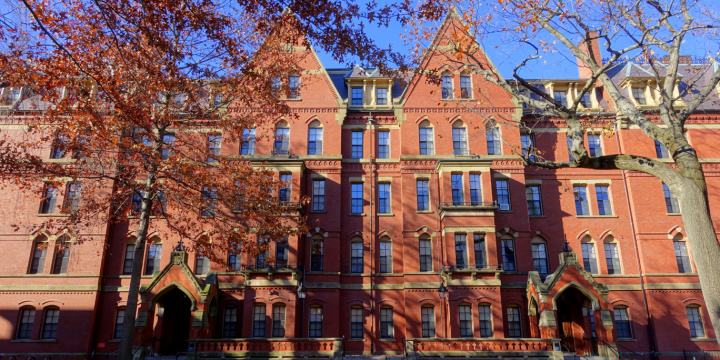
Matthews Hall, Harvard University. Photo: Daderot/Wikimedia Commons.
Harvard University had the most antisemitic incidents on college campuses during the 2021-2022 academic year, according to a new report investigating previously unexamined ways that anti-Israel activists attack and undermine Jewish identity.
Released on Wednesday by higher education antisemitism monitor AMCHA Initiative, the report, titled “Campus Antisemitism & the Assault on Jewish Identity,” claims that while previous studies have explored whether Jewish students are “safe” on campus, focus must be expanded to look at the ways in which Zionists are becoming increasingly excluded from campus life through classical “tropes of Jewish evil.”
“No other campus identity group is routinely subject to the kinds of well-orchestrated campaigns of identity assault that Zionist and pro-Israel students have had to endure for the last several years across the country,” the report said. “The threats to Jewish student identity come from their peers, professors, and even school administrators, and reach every corner of campus life — the quad, classrooms, dorm rooms, student newspapers, social media platforms, student government, and more.”
The report cited dozens of antisemitic incidents falling under its categories, including the expulsion of two Jewish women from a support group for sexual assault survivors at SUNY New Paltz, Harvard University’s campus newspaper endorsing the boycott, divestment, and sanctions (BDS) movement and its claim that “Zionism is Racism,” and a campaign against so-called “S***** Zionist Classes” organized by the University of Chicago’s Students for Justice in Palestine (SJP) chapter.
Often prompted by ideas spread by college faculty, antisemitic incidents were likeliest to occur at colleges with large Jewish student populations and increased 100% to 200% percent after Israel’s 2021 conflict with Hamas. Harvard University had the most, 25, scoring the worst in each category of antisemitism examined by the report.
In October, a controversial Palestinian activist who has been accused of “blatant” antisemitism by campus Jewish groups, spoke at Harvard in an event hosted by the school’s Palestine Solidarity Committee (PSC).
In April, the Harvard Crimson, the campuses’ flagship newspaper, endorsed the boycott, divestment sanctions (BDS) movement in an editorial described as “beyond disturbing” and rejecting “Jewish-self determination altogether” by Jewish leaders and students.
The report also cited University of Chicago, with 13 antisemitic incidents, and Tufts University, with 12. University of California, Los Angeles and Rutgers University, New Brunswick, two public universities each had 10.
“Faculty members’ propagation of falsehoods claiming, for instance, that Zionism has nothing to do with Judaism or that anti-Zionism is not antisemitism or that authentic Jews are anti-Zionist Jews, which we hear frequently at departmentally sponsored events, are not only giving these ideas academic legitimacy, it is really inciting the kinds of much more aggressive and active suppression of Jewish identity in the campus square,” AMCHA Initiative executive director and scholar Tammi Rossman-Benjamin told The Algemeiner.
“When Jewish students witness the relentless assault on Zionism, Zionists, and the campus organizations that support them, including Hillel, Chabad, and pro-Israel student organizations, they are likely to be far less open to partaking of opportunities to explore their Jewish heritage and identity during their undergraduate years,” it continued.
The report recommended that universities address antisemitism on campus either by treating Jewish students as a protected class as defined by Title VI of the 1964 Civil Rights Act or adopting a “single standard to judge objectionable behavior” based on the rights of individuals.
“It doesn’t matter how many condemnations or how many statements universities issue when Jewish students are targeted,” Rossman-Benjamin said. “What does a statement mean in terms of all the issues we have been talking about? It means very little. It’s a piece of paper that is archived and never looked at again. It’s not policy. Only policy that says ‘this is how we are going to treat these situations’ will be effective.”