Palestinians Accept first Saudi Ambassador
Error: Contact form not found.

 by Reuters and Algemeiner Staff

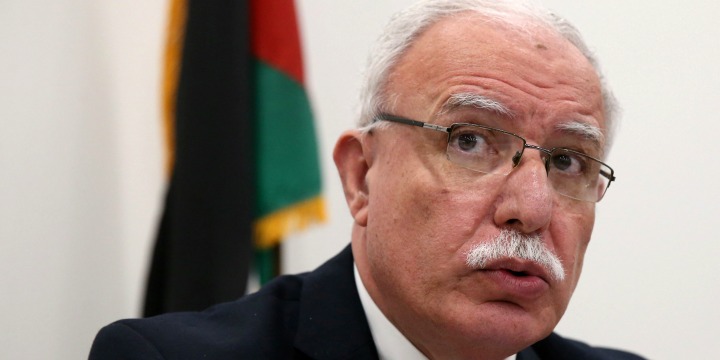
Palestinian Authority (PA) Foreign Minister Riyad al-Maliki holds a news conference at the International Criminal Court in The Hague, Netherlands, May 22, 2018. Photo: Reuters / Francois Walschaerts.
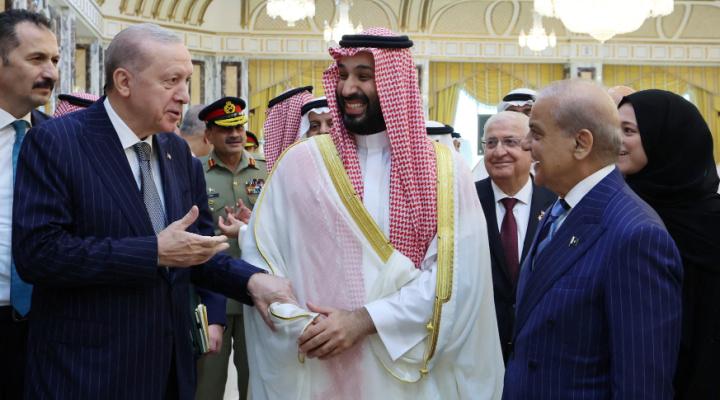
Palestinian officials welcomed a first Saudi Arabian ambassador on Saturday, they said, in a show of support even as the Gulf kingdom is considering the prospect of establishing formal diplomatic relations with Israel.
Saudi Arabia, Islam’s birthplace, has championed the Palestinian cause and shunned official ties with Israel but the U.S. is seeking to promote what could be a historic Middle East deal that would include normalizing Israeli-Saudi relations.
At a ceremony in Jordan, Palestinian President Mahmoud Abbas’s diplomatic adviser Majdi al-Khalidi received a copy of the credentials of Ambassador Nayef Al-Sudairi as a non-resident envoy, official Palestinian news agency Wafa said.
The move was “an important step that will contribute to further strengthening the strong brotherly relations that bind the two countries and the two brotherly peoples,” al-Khalidi said, according to Wafa.
Palestinian analyst Talal Okal said the diplomatic appointment was a half-step toward an official Saudi representation office in the occupied West Bank. “It is also a message Saudi Arabia was committed to the rights of the Palestinians in a fully sovereign state,” he added.
PALESTINIAN CONCERN
Palestinian Foreign Minister Riyad al-Maliki said last week that Abbas’s Western-backed Palestinian Authority is hoping to engage with Saudi Arabia over their concerns about the potential normalisation with Israel.
U.S., Israeli and Saudi officials have said any such agreement would be some way off, with complex issues to be resolved, including an escalation in violence in the Israeli-occupied West Bank and the possibility of development of civilian nuclear power by Saudi Arabia.
Palestinians are concerned that any agreement may weaken support for their cause in the wider Arab world and undermine their hopes of an independent Palestinian state.
Saudi Arabia has quietly accepted the so-called Abraham Accords that have normalised ties between Israel and Gulf states United Arab Emirates and Bahrain.
When asked if he would consider concessions to the Palestinians as part of a Saudi deal, Israeli Prime Minister Benjamin Netanyahu said in an NBC interview this month: “The Palestinians should have all the power to govern themselves and none of the powers to threaten us.”
Members of his hard-right coalition, however, have ruled out any concessions.