










Meta President: Holocaust Survivor Shows How Technology Can Help Us Learn From the Past
Error: Contact form not found.

 by Nick Clegg

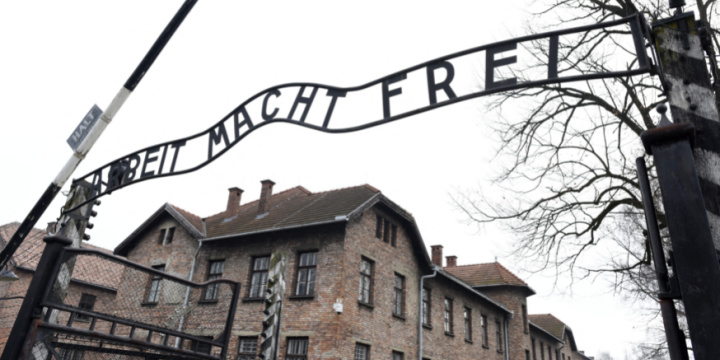
The sign “Arbeit macht frei” (“Work makes you free”) is pictured at the main gate of the former Nazi concentration and extermination camp Auschwitz in Oswiecim, Poland. Reuters/Pawel Ulatowski
“No one will believe you. No one will remember.”
That’s how the guards in Nazi concentration camps would taunt their victims. But we do remember, in large part because many people who survived the Holocaust have told us their stories, and the stories of those they knew.
But the generation who lived through those dark days is dwindling. If their stories disappear as their voices fade, we endanger the future by risking a repeat of the past.
To teach new generations about the horrors of the Holocaust, we need to find ways to preserve these stories. And new technologies can help.
This week, I had the privilege of sitting down with Inge Auerbacher, who was just seven-years-old when she was a prisoner in the Theresienstadt concentration camp, in what is now the Czech Republic.
In addition to being a remarkable person — an accomplished chemist, author, and poet, who speaks with huge clarity and compassion — Inge’s story is the centerpiece of a new and ingenious virtual reality experience.
Technologies like artificial intelligence and virtual and augmented reality might sound futuristic, but they have the potential to connect us to our past in profound ways.
Inge’s experience — called “Tell Me, Inge” — seamlessly combines conversational video AI technology and hand-drawn 3-D animations to vividly bring Inge’s memories to life. Viewers can speak to her, learn about her experiences, and get a sense of her indomitable spirit, which carried her through the unspeakable horrors of the time.
“Tell Me, Inge” is a technological marvel in its own right, but it also represents a profound step forward in Holocaust education and remembrance. It shows how immersive technologies can build empathy and encourage people to reflect on the lessons of history. By giving people an opportunity to engage directly with Inge and her story, the initiative creates a deeply personal connection with the past, driving home the importance of preserving the memory of the Holocaust and the six million Jews who were murdered.
“Tell Me, Inge” is available in the Meta Quest store, and anyone can access it on a phone or computer at inge.storyfile.com.
I know a little about the value of remembrance from my own family’s experience.
When she was a young girl, my mother and her sisters spent many years in Japanese prisoner of war camps in Indonesia. They were brutal places, full of cruelty, illness, and starvation. My brothers, my sister, and I were aware of this as we grew up, but my mother sheltered us from the horrific details when we were young. It was only when we were older that she told us what she’d been through.
It made a lasting impression on me and the way I see the world. I want the next generation and those that follow to know and understand what happened in the darkest period of our modern history, and to form their own lasting impressions that shape their outlook on the world.
Of all the areas of life that new technologies will have an impact on in the coming years, education is the one that I’m most optimistic about. Metaverse technologies create a sense of shared space and shared experience that you can’t get from books or flat screens. That matters, because — for most people — learning is social. We learn from and with others, and from each other’s experiences. Learning is as much about interaction and discussion as it is about absorbing facts.
An experience where you can talk and interact with a Holocaust survivor like Inge is likely to have a profound impact. Inge is a special person, and I will remember our conversation for a very long time. I hope this technology gives many others the opportunity to do the same.
Nick Clegg is the former British Deputy Prime Minister and currently a President of Global Affairs at Meta.


