









Rising Antisemitism on Campus Demands a Strong Legal Offense
Error: Contact form not found.

 by Carly F. Gammill

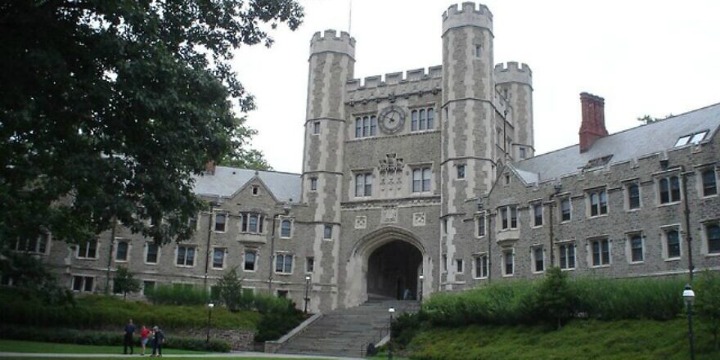
Princeton University in New Jersey. Photo: Yakinodi / Flickr
The surge in anti-Israel and antisemitic sentiment in response to Hamas’ October 7 massacre is cause for serious alarm. This is particularly the case on college campuses, where Jewish, Israeli, and Zionist students across the nation face incidents of ostracism, harassment, discrimination, threats, and violence in unprecedented numbers.
Of course, antisemitism and its glorification are not new phenomena. In 1939, for example, the freshman class at Princeton University voted Adolf Hitler the “greatest living person.” The following year’s freshman class repeated the vote with the same results, as did students at Georgetown University.
But we have two key advantages over our 1930s and 1940s counterparts. First, we know what happened the last time we hoped and waited for the antisemitic rhetoric at universities to subside. Instead of being eradicated, it merely laid low for a few decades, before exploding beyond any level we’ve previously experienced. It has consequently become our duty to ensure that university administrators are on clear notice about their legal obligation to protect their Jewish and Israeli students from the pervasively hostile environment that such antisemitism has created on many campuses. And if they deliberately ignore our warnings and efforts to assist them in this regard, it is our duty to hold them accountable.
This is where our second advantage comes into play. We now have a powerful legal tool in Title VI of the Civil Rights Act of 1964 (Title VI). A cornerstone of American anti-discrimination law, Title VI prohibits discrimination based on race, color, or national origin in programs receiving Federal financial assistance. Recipients who fail to comply with their responsibilities under Title VI risk the loss of their Federal funding. While there is no confusion that the “national origin” category of Title VI covers Israeli students, the US Department of Education has repeatedly affirmed that its protections also extend to groups based on real or perceived shared ethnicity or ancestry, including Jewish students.
This means that administrators must acknowledge what is, for most Jews, a very real connection between Jewish identity and the Jewish ancestral homeland of Israel, and take concrete steps to ensure that Jewish students are not subjected to a hostile campus climate based on this component of their identity.
In accordance with the lessons of history, the rampant antisemitism threatening to overtake many campuses since October 7 — and our commitment to supporting students in the face of anti-Jewish bias and bigotry — the StandWithUs Center for Combating Antisemitism and the StandWithUs Saidoff Legal Department are heavily focused on ensuring that administrators across the nation are aware of and complying with their legal duties to Jewish and Israeli students. Toward that end, we have identified specific actions they should take to align their institutions with the requirements of Title VI and other civil rights laws. In addition to the low-hanging fruit of even-handedly enforcing existing campus policies (e.g., imposing appropriate sanctions against those who threaten Jews, individually or collectively), such actions include the following:
(1) While students generally have the right to express their views on campus, administrators must prevent academic departments, student government bodies, and registered student groups, from misusing university resources — such as official school social media accounts and access to email listservs — to propagate hatred or incite violence. Such actions run afoul of professional standards, violate university policies, and create a hostile environment for Jewish and Israeli students.
(2) Universities have the responsibility to ensure that hateful speech does not escalate to harassment, discrimination, or criminal conduct on campus. If and when it does, it is not protected by academic freedom or freedom of speech, and the university administration is obligated to take the necessary steps — including punitive measures — to remedy the harm caused and deter such conduct from recurring.
(3) It should be self-evident that Hamas’ massacre, dismemberment, rape, beheadings, and kidnapping against anyone, let alone children, babies, the disabled, and the elderly, can never be justified. Yet moral clarity on these matters appears to be lacking within higher education institutions. University administrators should set the tone on their universities by using their voices to unequivocally condemn such acts of terror — which in no way undermines their ability to offer legitimate criticism of other conduct.
(4) University administrators must ensure that faculty are unable to misuse their class time (including cancelling classes) for political indoctrination, especially when it may serve to marginalize Jewish students and support or promote terrorism or other forms of violence.
(5) While the right to protest is generally protected under the First Amendment, allowing outside community members who may harbor antisemitic intentions to participate in student protests on university grounds is not always warranted or advisable. Administrators should do everything in their power to limit non-student access to student events, check for valid student identification, and address unlawful behavior — including by having the police make arrests where appropriate — to help protect the safety of all students.
(6) To the extent permissible under applicable law, universities should prohibit the wearing of masks during demonstrations. They should also ensure robust enforcement of laws prohibiting the wearing of a mask to conceal one’s identity during the commission of a crime. These actions can help prevent violence and harassment on campus, and protect all members of the campus community.
Universities today once again find themselves torn between asserting their inclusive values and acting on them. This time, we have the benefit of hindsight and the legal tools to protect students facing mounting antisemitism. It is the obligation of college and university administrators to apply both. And it is our mission — at StandWithUs and across the nation — to ensure that they do.
Carly Gammill is the director of the StandWithUs Center for Combating Antisemitism. StandWithUs is an international nonpartisan education organization that supports Israel and fights antisemitism.