





What Will Happen in Syria? The Truth Is — No One Knows
Error: Contact form not found.

 by Daniel Pomerantz


A person holds up a Syrian opposition flag, as people celebrate after Syrian rebels announced that they have ousted President Bashar al-Assad, in Majdal Shams, a Druze village in the Israeli-occupied Golan Heights, December 8, 2024. Photo: REUTERS/Stoyan Nenov
The story of Bashar al-Assad’s downfall actually begins shortly after October 7, 2023, when Israel’s “War Cabinet” adopted two official war goals: to dismantle Hamas’ military and political control in Gaza, and to bring the hostages home. Eleven months into the fighting, Israel stepped up its effort to achieve a third goal — returning Israel’s northern population safely to their homes. Less than six hours later, more than 3,000 pagers exploded throughout Lebanon.
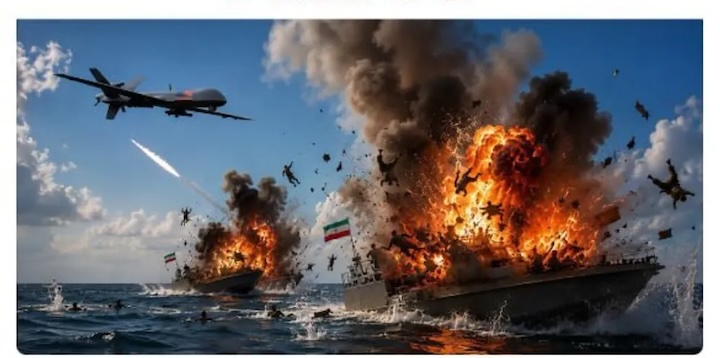
Since that time, Israel has eviscerated Hezbollah; it has also degraded Hamas from a terror semi-state to a small scale insurgency group, and utterly humiliated Iran. Iran’s humiliation, which began when Israel disintegrated much of its terror proxy network, came to a dramatic conclusion when Israel entered Iranian airspace, destroyed its missile factories, and wiped out its entire, Russian-made air defense system.
Then, at 4am on November 26, the Lebanon “cease-fire” agreement began. Predictably, Hezbollah has been breaching the ceasefire ever since, but unlike in prior years, Israel is directly enforcing the agreement through military action, as permitted by the cease-fire’s terms.
Meanwhile, key players in Syria had been watching. Its president, Bashar al-Assad, had survived the Syrian civil war that began in 2011 — and he did so mainly through support from Russia and Iran, including an estimated 10,000 seasoned Hezbollah fighters.
In exchange, Assad provided both his patrons with access to the country, including turning Syria into one big Iranian highway for moving weapons to Hezbollah — primarily for use against Israel.
Now, however, Russia’s forces are being massively depleted by its invasion of Ukraine, Iran is weakened and far less feared after its shellacking at the hands of the IDF, and Hezbollah is a shadow of its former self. The various rebel groups in Syria, who had been contained but never defeated, took notice, and attacked.
Assad was overthrown on Sunday morning, primarily by radical Sunni extremists — many that have been linked to the ISIS and Al-Qaeda terror organizations in the past. A central core of those militants have rebranded themselves under the name “Hayat Tahrir al-Sham” (HTS). HTS is backed primarily by Qatar and Turkey, as well as the Muslim Brotherhood. Unconfirmed reports allege that the US secretly supported HTS in exchange for a promise to not attack the US or Israel, though history shows that such promises from terror groups are rarely reliable. HTS has publicly said it renounced terrorism, and seeks a free Syria.
Another group fighting in Syria is the so called “Syrian Democratic Forces” (SDF), a coalition of Kurds, Christians, and other minorities, connected with the PKK/YPG, a Kurdish militant group widely designated as a terror organization, with a Marxist, anti-US and anti-Western ideology. Nonetheless, the US has been backing the SDF for years — including with US troops — hoping that this will prevent the group from turning on the West, despite its violent ideology.
Meanwhile, Iraq has been absorbing many of the Shiite fighters fleeing Syria, raising the question of whether America’s plan to fully withdraw from Iraq by 2026 is wise under the circumstances. Iran, which had initially sent fighters to protect Assad, has since pulled out, and Hezbollah sent a small contingent of some 2,000 fighters, who proved mostly ineffective.
With the departure of Assad, Iran and Russia appear to have lost their influence in Syria, which is yet another blow to Iran’s proxy network, and at least in part a repercussion from Israel’s astounding military successes since October 7. Yet the forces taking over Syria are mostly the same violent Sunni terrorists who have been fighting for control of Syria since the Arab Spring in 2011. (Given that Iran and Russia were the only reasons Assad lasted in power so long — and slaughtered hundreds of thousands of people — it’s unlikely Syria’s new leaders will support Russia and Iran, but that’s definitely not a guarantee.)
Despite its astounding successes since October 7, Israel has not yet achieved its war goals: it is still not safe for Israelis to return to their homes in the North, Hamas still clings to a degree of control in Gaza, and some 100 hostages still remain in horrific captivity, either alive or dead.
Yet there is cause for optimism. Though the northern cease-fire agreement is technically between Israel and the government of Lebanon, it was also approved by Hezbollah, at least what’s left of it. The terror group, which had sworn to keep fighting until Israel left Gaza, has therefore stepped back from its promise, thus abandoning Hamas to its own devices. This blow to Hamas’ delusion of defeating Israel through a regional war, along with some fierce rhetoric by incoming President Donald Trump, has raised hopes of closing a deal to, at long last, bring home the some 100 Israeli hostages who remain in Hamas captivity.
Trump has also vowed to reinstate his campaign of “maximum pressure” on Iran, which drastically reduced its influence in the region, and made it vulnerable to its own domestic population, much of which would like to overthrow the Islamic regime.
Meanwhile, unconfirmed reports out of Yemen indicate that the continued weakening of Iran may trigger an attempt by Saudi backed forces to overthrow the Houthi rebel group. Finally, here in Israel, we are optimistic that the Abraham Accords process will resume, beginning with Saudi Arabia and perhaps spreading across the more moderate parts of the Arab world.
In short, there are no “good guys” to root for in Syria, and there are no simple solutions to the challenges faced by Israel and the Western world. Yet Israel is significantly safer today than it was 14 months ago, and is now widely considered the preeminent power in the Middle East: by friends and enemies alike.
Daniel Pomerantz is the CEO of RealityCheck, an organization dedicated to deepening public conversation through robust research studies and public speaking.