



Media’s Favorite Gaza Source Attacks Protestors for Rallying Against Hamas
Error: Contact form not found.

 by Rachel O'Donoghue


A Palestinian Hamas terrorist shakes hands with a child as they stand guard as people gather on the day of the handover of Israeli hostages, as part of a ceasefire and a hostages-prisoners swap deal between Hamas and Israel, in Rafah in the southern Gaza Strip, Feb. 22, 2025. Photo: REUTERS/Ramadan Abed
In the largest anti-Hamas demonstrations Gaza has seen in years, thousands of Palestinians have taken to the streets over the past week. Protesters in the north of the Strip — particularly in Gaza City — have chanted “Hamas out” and “Hamas are terrorists,” while holding banners that read, “Hamas does not represent us.”
Hamas has responded with predictable brutality.
According to reports from local activists, at least six protest organizers have been executed. Others were tortured and dumped in public areas as a warning.
The family of 22-year-old Oday Nasser Al Rabay says Hamas kidnapped him and later left his body on their doorstep, with witnesses reportedly describing how he was beaten with metal rods and dragged by a rope tied around his neck.
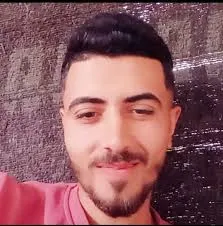
Oday Nasser Al Rabay
This is the cost of dissent in Gaza. And yet Dr. Ghassan Abu-Sittah — the British-Palestinian surgeon celebrated by Western media and recently elected Rector of the University of Glasgow — has made it clear he stands with the torturers, not the tortured.
In an Arabic-language interview with Russian state-controlled media RT, Abu-Sittah dismissed the protests as “a type of psychological warfare against the resistance in Gaza.” He claimed they were orchestrated by the Palestinian Authority and denounced them as “a betrayal and treachery.” According to Abu-Sittah, those risking their lives to speak out against Hamas have “stabbed the resistance in the back.”
Apparently, opposing a UK-designated terror group in Gaza is now “treachery” in the eyes of Glasgow’s rector.
He even mocked the scale of the protests, insisting they were smaller than the crowds who “used to come out every time there was a prisoner exchange” — a disturbing comment, since such exchanges involved Hamas trading brutalized Israeli hostages for convicted terrorists. One can reasonably infer Abu-Sittah was among the celebrants.
When pressed by the interviewer about possible alternatives to Hamas rule, Abu-Sittah snapped that the Palestinian Authority should focus its attention on the West Bank, pointedly rejecting the idea of any political solution in Gaza that doesn’t include Hamas. In other words, better to let Gazans suffer under Hamas tyranny than consider a future without it.
The mask is off.
Western media — especially in the UK — have given Abu-Sittah an uncritical platform for over a year and a half, treating him as a neutral humanitarian, a credible expert, and a moral authority.
Dr. Abu-Sittah has made his position clear: he sympathizes with Hamas.
The media can stop pretending now. Stop pretending that a medical degree and a British university title make someone a voice of reason. Abu-Sittah is not a hero. He is not a humanitarian. He is not even neutral.
He is spouting propagandist for Hamas. And that is the only thing the media should be saying about him.
The author is a contributor to HonestReporting, a Jerusalem-based media watchdog with a focus on antisemitism and anti-Israel bias — where a version of this article first appeared.