



Lebanon’s Army to Disarm Hezbollah Near Israeli Border Within 3 Months in First Step to Restore State Control
Error: Contact form not found.

 by Ailin Vilches Arguello


Lebanese President Joseph Aoun, Prime Minister Nawaf Salam, and members of the cabinet stand as they attend a cabinet session to discuss the army’s plan to disarm Hezbollah, at the Presidential Palace in Baabda, Lebanon, Sept. 5, 2025. Photo: REUTERS/Mohamed Azakir
Lebanon’s army plans to fully disarm Hezbollah near the Israeli border within three months, the first step in the Lebanese government’s plan to restore authority and curb the influence of the Iran-backed terror group within the country.
On Tuesday, Lebanon’s Foreign Minister Youssef Raggi confirmed to AFP that the government received a five-stage plan last week from the military to enforce a policy placing all weapons under state control.
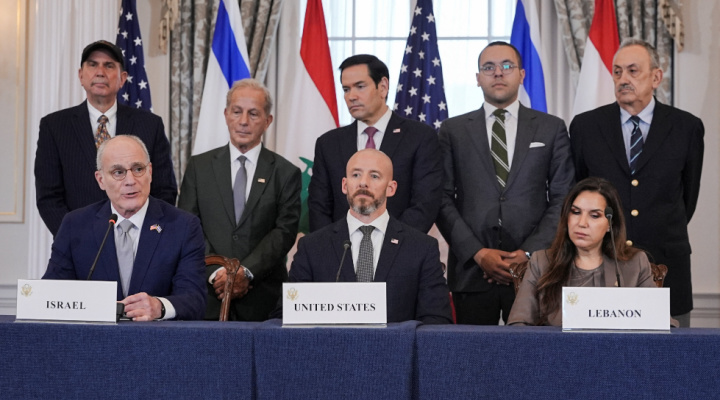
The move follows Lebanese authorities’ approval last month of a US-backed initiative to disarm Hezbollah in exchange for a halt to Israeli military operations in the country’s south.
Amid mounting international pressure to disarm the terrorist group, Lebanon’s cabinet tasked the army with developing a strategy to establish a state monopoly on arms.
For years, Israel has demanded that Hezbollah be barred from carrying out activities south of the Litani, located roughly 15 miles from the Israeli border.
However, Hezbollah has pushed back against any government efforts, insisting that negotiations to dismantle its arsenal would be a serious misstep while Israel continues airstrikes in the country’s south.
The terrorist group has even threatened protests and civil unrest if the government tries to enforce control over its weapons.
But as Hezbollah emerged weakened from a yearlong conflict with Israel, calls for the Islamist group’s disarmament have gained new momentum, reshaping a power balance it had long controlled in Lebanon.
Last fall, Israel decimated Hezbollah’s leadership and military capabilities with an air and ground offensive, following the group’s attacks on Jerusalem — which they claimed were a show of solidarity with the Palestinian terrorist organization Hamas amid the war in Gaza.
In November, Lebanon and Israel reached a US-brokered ceasefire agreement that ended a year of fighting between the Jewish state and Hezbollah.
Under the agreement, Israel was given 60 days to withdraw from southern Lebanon, allowing the Lebanese army and UN forces to take over security as Hezbollah disarms and moves away from Israel’s northern border.
However, Israel maintained troops at several posts in southern Lebanon beyond the ceasefire deadline, as its leaders aimed to reassure northern residents that it was safe to return home.
Jerusalem has continued carrying out strikes targeting remaining Hezbollah activity, with Israeli leaders accusing the group of maintaining combat infrastructure, including rocket launchers — calling this “blatant violations of understandings between Israel and Lebanon.”