







Jewish Peoplehood Is a Mirage — But We Can Change That
Error: Contact form not found.
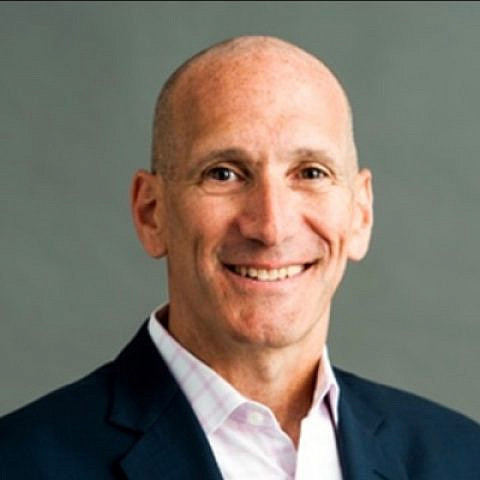
 by Steven Rosenberg


Jewish Americans and supporters of Israel gather at the National Mall in Washington, DC on Nov. 14, 2023 for the “March for Israel” rally. Photo: Dion J. Pierre/The Algemeiner
“Peoplehood” is the term du jour in the Jewish world, appearing in sermons, mission statements, and grant proposals.
It’s supposed to capture something both ancient and modern — the shared bond that unites Jews everywhere, regardless of denomination, practice, or geography. It’s the idea that even in disagreement, there is a deeper connective tissue — a sense of belonging to a people, not just a religion. It sounds nice, and maybe it even feels good to say. But what does it actually mean in 2025, when the Jewish world seems less like one people and more like a set of rival tribes, each convinced that it holds the true definition of Jewish authenticity?
There was a time when the concept of Jewish peoplehood felt self-evident. Jews saw themselves as part of something larger, bound by shared history, memory, persecution, and purpose. But that unity — born of necessity and survival — has fractured under the weight of modern comfort, politics, and identity. Today, we can’t even agree on what it means to be Jewish, let alone what it means to be one people. One group claims moral superiority because they keep kosher; another prides itself on rejecting ritual in favor of “universal values.” Some define their Jewishness through the lens of Zionism, while others recoil at the very word. We’ve turned Jewish identity into a menu of choices rather than a covenant of connection.
The divide over Israel exposes this most clearly. Many American Jews — particularly younger ones — struggle to separate their discomfort with Israel’s government from the deeper idea of Israel itself. Some reject Israel’s right to exist as a Jewish state because they confuse it with a political administration they dislike. Others, equally passionate, view criticism of Israel as betrayal.
The result is a chasm so deep that many can no longer hold a conversation without suspicion or anger. How can there be “peoplehood” when one side waves an Israeli flag as a symbol of pride, while another side sees it as an emblem of oppression? When some Jewish college students feel safer marching with pro-Palestinian activists than standing beside their own community, something fundamental has been lost.
Even beyond politics, the fragmentation runs deep. Jews argue over who is “really” Jewish — by birth, by choice, by conversion, by practice. Entire denominations are dismissed as illegitimate by others. In one community, a rabbi’s ordination is honored; in another, it’s ignored. There are Orthodox Jews who see Reform Jews as heretics, and secular Jews who see Orthodox Jews as relics. We can’t even agree on the basics of Shabbat, kashrut, or what qualifies as antisemitism.
If we can’t find shared meaning in the fundamentals, what makes us think we can unite around something as abstract as “peoplehood”?
The truth is that peoplehood without shared purpose is just a slogan. It’s comforting, but empty. Real peoplehood requires a common standard — not of uniformity, but of mutual responsibility. You don’t have to keep kosher, but you have to respect those who do. You don’t have to love every Israeli policy, but you should care about the survival of the Jewish homeland. You don’t have to believe in God, but you should believe that Jewish continuity matters.
Too many Jews are content to curate their own version of Judaism, one that excludes anyone who doesn’t fit neatly into their worldview. We’ve replaced peoplehood with partisanship — Jewish identity as an expression of politics, rather than as a transcendent bond.
And yet, despite all this, there remains something stubborn and sacred about Jewish connection. It shows up in the moments that matter most — at funerals, at seders, at times of danger or pride. When Jews were massacred in Pittsburgh, or when hostages were taken in Israel, Jews across the spectrum felt it personally. For all our internal conflict, we share an instinctive empathy for each other’s pain and triumph. That reflex — to show up, to care, to feel bound by fate — might be the last vestige of real peoplehood we have left. But if we don’t nurture it, it won’t survive the next generation.
Maybe peoplehood shouldn’t be something we claim; maybe it should be something we earn. Not by declaring ourselves united, but by doing the work of unity — engaging across differences, listening with humility, and showing up even when it’s uncomfortable.
The Jewish story has never been one of sameness. It has always been one of argument, wrestling, and reconciliation. Peoplehood, if it is to mean anything at all, must be about choosing to stay in the conversation even when it’s hard, even when the other person drives you crazy, and even when you believe they’re wrong.
The challenge before us isn’t to define peoplehood. It’s to live it — to make it visible in how we treat one another, how we defend each other, and how we choose to remain connected even when we disagree. Because without that, all the talk about peoplehood is just talk.
Steve Rosenberg is the Principal of the Team GSD and the author of the book: Make Bold Things Happen: Inspirational Stories from Sports, Business And Life.


