





Daniel Patrick Moynihan and the Courage to Name Evil
Error: Contact form not found.
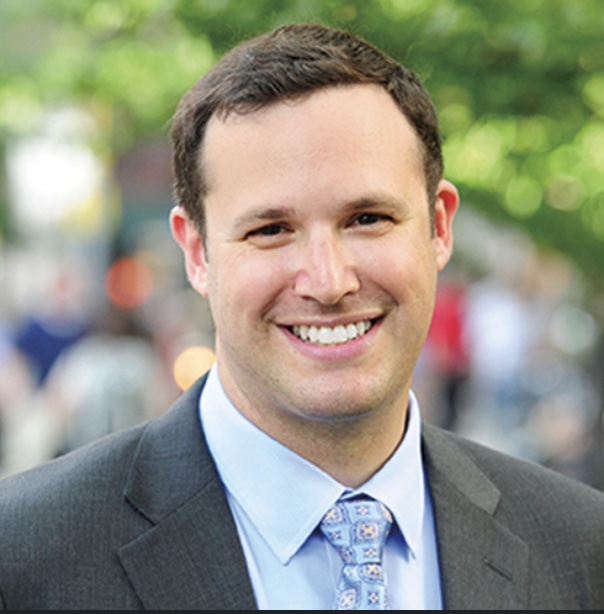
 by Samuel J. Abrams


Daniel Patrick Moynihan at the UN Security Council. Photo: Wiki Commons
On Nov. 10, 1975 — almost 50 years ago to the day — Daniel Patrick Moynihan did something that few diplomats or public figures would dare attempt today: he told the truth in public, when the world preferred a lie.
As the United States ambassador to the United Nations, Moynihan rose before the General Assembly to condemn Resolution 3379 — the infamous measure that declared Zionism to be “a form of racism and racial discrimination.”
Moynihan saw, with prophetic clarity, that this was no ordinary resolution. It was a calculated attempt to turn antisemitism into international law and an effort to delegitimize the Jewish people’s right to self-determination under the guise of anti-racism.
Moynihan warned plainly, “The United Nations is about to make antisemitism international law.”
And then, in words that still thunder half a century later, he declared: “[The United States] does not acknowledge, it will not abide by, it will never acquiesce in this infamous act … A great evil has been loosed upon the world.”
I frequently open lectures with that story. I tell my students and audiences that if they remember nothing else from my remarks, they should remember this: courage begins with naming things truthfully. It’s why Moynihan remains one of my heroes. At a time when global institutions and elite opinion had succumbed to moral cowardice, he reminded the world — and America — that truth is not negotiable.
The Corruption of Language
Moynihan once wrote, “Everyone is entitled to his own opinion, but not to his own facts.”
That line, often repeated but rarely understood, expressed his deepest conviction: that words must map to reality, not be twisted to serve ideology. When the United Nations turned Zionism — a movement of liberation — into a synonym for racism, it wasn’t merely lying about Israel. It was corrupting the moral language on which civilization depends.
That corruption of language is what Moynihan fought so fiercely against. His 1975 speech was not only about defending Israel; it was about defending truth. He understood that words matter; that they are the means by which we give order to the world around us, and that once institutions redefine words to suit politics, they lose moral legitimacy.
In Jewish terms, what Moynihan did that day was Kiddush Hashem, sanctifying the divine name by standing for truth before the nations. He refused to let a lie pass unchallenged, even when doing so made him unpopular among diplomats and intellectuals. For him, the duty to speak truth outweighed the instinct to please.
Echoes in Our Time
Half a century later, his words feel hauntingly relevant. The same moral inversion that he condemned at the UN now reappears across Western institutions.
On elite campuses, students chant that “Zionists don’t belong.” Faculty resolutions describe the murder of civilians as “resistance.” Jewish students are told that their identity is oppression and their longing for homeland a form of violence. The language of “decolonization” has become the new euphemism through which antisemitism cloaks itself in moral respectability.
Moynihan foresaw this. He understood that the battle for truth is never merely political; it is cultural and linguistic. His stand in 1975 was not only a defense of Israel but of liberal civilization itself.
As he argued, culture, not politics, determines the success of a society — yet politics can change a culture and save it from itself. At the UN, he embodied both truths and proved that culture and politics alike can be redeemed when courage and clarity converge.
Many in the diplomatic corps thought him reckless; others accused him of inflaming tensions. But Moynihan knew that civility without conviction is just another form of surrender.
In refusing to “tone down” his words, he restored to American diplomacy something that had been fading for years: moral seriousness.
On Dec. 16, 1991 — 16 years after his speech and in the wake of the Soviet Union’s collapse — the United Nations repealed that infamous resolution. The reversal did not erase the damage, but it vindicated his courage and exposed the Soviet motives he had identified all along.
Geopolitical Tensions Today
Today, Moynihan’s moral framework faces new tests as the Abraham Accords expand into uncharted territory. As debates swirl over bringing Kazakhstan into the Abraham Accords, commentators like Amit Segal argue the move has little to do with Israel and everything to do with containing Iran and Russia.
Kazakhstan, a Muslim-majority state and the world’s largest uranium producer, accounting for about 40% of global supply, sits in a crucial corridor between Moscow’s weakening sphere and Tehran’s growing ambitions. For Washington, its inclusion symbolizes an attempt to expand the US-Israel-Arab alliance into Eurasia — a rebuke to authoritarian revisionism.
But others, like Shay Gal, warn that such moves may blur the moral map Moynihan fought to preserve. By tethering Israel’s normalization efforts to a bloc still tied to Moscow and influenced by Ankara — a government that has positioned itself as Hamas’ diplomatic advocate — the United States risks trading moral clarity for geopolitical convenience.
Moynihan would have understood this tension. He knew that alliances built without a moral spine eventually fracture under pressure. As historian Gil Troy recently wrote, Moynihan “backed Israel for reasons that had almost nothing to do with it.” He was defending the West’s moral vocabulary from Soviet distortion — the same “totalitarian mind” that “reeked of the totalitarian state.”
That distortion is visible today when democracies hesitate to call terrorism by its name or confuse appeasement with diplomacy. Whether in the UN, universities, or Washington’s corridors of power, the temptation to “tone down” the truth — to be “polite” in the face of lies — remains.
Moynihan mocked that instinct in 1975: “What is this word ‘toning down’; when you are faced with an out-right lie about the United States and we go in and say this is not true. Now, how do you tone that down? Do you say it is only half untrue?” he asked. “What kind of people are we? What kind of people do they think we are?”
He asked that question then. We should ask it again now.
The Lesson for Us
In my lectures, I tell students and audiences that moral courage isn’t about volume or virality. It’s about standing for something when every incentive points the other way. Moynihan didn’t posture. He told the truth in an unfriendly room — and did it with moral gravity. His example reminds us that education and citizenship alike begin with facts, not feelings, and that democracy cannot endure if we lose the courage to call things by their right names.
When Moynihan declared that “a great evil has been loosed upon the world,” he wasn’t speaking only of 1975. He was naming a permanent temptation: to believe that truth is negotiable, to mistake moral complexity for moral cowardice.
Moynihan’s life proves that civic courage and Jewish moral witness are inseparable. The fight against the world’s oldest hatred is not only Israel’s fight — it is the test of whether the West still believes in truth itself.
When the powerful grow timid and relativism reigns, we must remember Moynihan’s example: a man who refused to be silent while the world applauded a lie.
Because when a great evil is loosed upon the world, truth must be spoken aloud. Daniel Patrick Moynihan did just that. And that is why, half a century later, I begin my classes with his words and count him among my heroes.
Samuel J. Abrams is a professor of politics at Sarah Lawrence College and a senior fellow at the American Enterprise Institute.


