The Jewish ‘Bubble’ — and Why It Still Matters for Our Future
Error: Contact form not found.
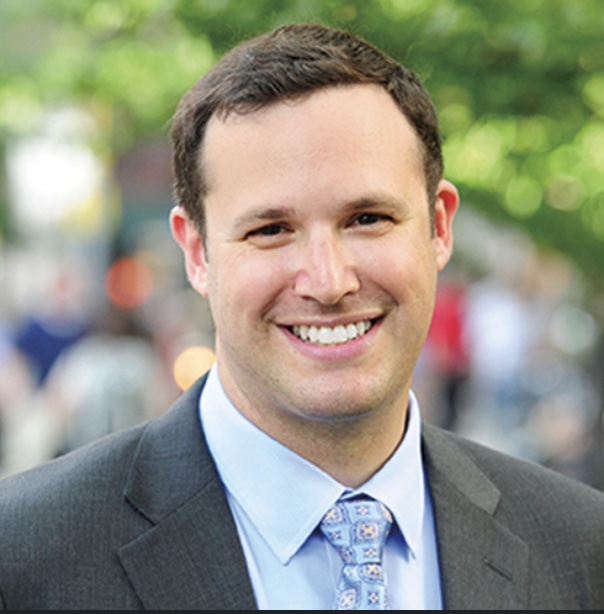
 by Samuel J. Abrams


Muhlenberg College students leaving for a Birthright Israel trip.
Photo: Facebook via Hillel: Taglit-Birthright Israel.
One of the most revealing questions you can ask a Jewish college student today is not what they think about Israel or how they view campus politics. It is whether they ever lived inside a real Jewish world before arriving at school.
Dan Senor‘s three touchstones — Jewish day school, Jewish summer camp, and a meaningful trip to Israel — turn out to be less about nostalgia than about survival. As antisemitism continues to erupt across America’s elite campuses, the students who remain confident, anchored, and unafraid are almost always those who experienced these “Jewish bubbles” long before anyone tried to tell them what being Jewish should mean.
I saw this long before I became a professor embedded in the world of higher education.
In my essay “High School Should Be Upsetting,” I wrote about attending Akiba Hebrew Academy — a pluralistic Jewish day school outside of Philadelphia — where nothing was uniform and everything required thinking. Some classmates kept kosher; others grabbed pizza and burgers freely. Some welcomed Shabbat with reverence; others barely thought about it. These were not superficial differences. They forced us into the daily work of argument, interpretation, and meaning-making. We learned that Jewish identity can withstand disagreement — that disagreement is itself a generative part of Jewish life. That formation did not insulate me from the world. It prepared me for it.
It also gave me something deeper. As I argued recently in “The Lessons We Were Taught and the Ones Being Forgotten,” Jewish classrooms once fused the study of prophets with photographs of Auschwitz, maps of Israel, and the trembling voices of survivors.
We learned early that justice without memory collapses into performance, that Jewish survival is not just historical but moral, and that being a Jew means carrying responsibility, not merely sentiment. These lessons were not designed to make us comfortable. They were designed to make us serious. That seriousness — an identity rooted in obligation rather than performance — is exactly what steadies young Jews today when campus climates turn hostile or morally confused.
Senor’s intuition about the “bubble” is more than anecdotal. It is empirically true. Jewish day school graduates consistently exhibit higher levels of Jewish literacy, deeper ritual practice, and stronger communal commitment, according to decades of Avi Chai Foundation research.
Jewish summer camps extend that formation into adolescence; the Foundation for Jewish Camp has repeatedly shown that alumni maintain Jewish friendships at dramatically higher rates and build Jewish homes of their own with greater confidence and intention. These friendships become ballast — the quiet, steadying presence of peers who share memory and meaning.
Rabbi Jonathan Sacks captured the heart of this when he wrote, “Moses and Aaron epitomize the two great roles in Jewish continuity — horim and morim — parents and teachers. A parent hands on the Jewish heritage to their children; a teacher does likewise to their disciples.” That investment — of presence, attention, and seriousness — is exactly what day schools, camps, youth groups, and Israel programs offer when they are at their best. They do not simply transmit heritage; they cultivate character. They shape conscience. They give young Jews a framework sturdy enough to meet the world without losing themselves.
Israel trips add something irreplaceable: narrative consciousness. Research on Birthright and other immersive Israel programs shows that participants return with a firmer sense of peoplehood, greater historical awareness, and a deeper understanding that being Jewish is a source of responsibility rather than defensiveness. Students who have walked the streets of Jerusalem or listened to the wind on the Golan Heights are not easily undone by slogans or distortions. They have seen complexity — and beauty — for themselves.
These experiences form a pipeline. Day schools cultivate literacy. Camps cultivate community. Israel cultivates memory. Together, they produce adults who are not bewildered by the demands of identity but strengthened by them. When students have studied texts, lived in Jewish community, and seen Jewish history with their own eyes, they carry an inner architecture that does not collapse when external pressure rises.
That was the theme running through the 2025 Tikvah Jewish Leadership Conference, where Senor spoke to a standing-room crowd. Again and again, speakers returned to the same truth: Jewish continuity will not be secured through slogans or reactive outrage. It will be secured through communities and institutions that form Jews — thickly, relationally, substantively. The future belongs to those who build Jewish life with depth, not performance.
And yet we find ourselves in a moment when the very infrastructure that sustains Jewish identity is thinning. Too many families treat day school as a luxury, camp as optional, Israel trips as politically fraught, and synagogue life as intermittent. Young Jews arrive on campus with warm feelings but thin foundations — a Judaism made of nostalgia rather than knowledge. Then the pressure comes, from peers and professors alike, and the identity that once felt easy suddenly feels fragile.
The greatest threat to young Jews today is not a lack of passion. It is a lack of preparation. Jewish identity cannot be episodic. It cannot survive on aesthetic appreciation or occasional observance. It flourishes when it is lived — daily, joyfully, rigorously, and in the company of others. If we want Jewish students to stand tall under pressure, then we must give them foundations deep enough to bear the weight.
Senor’s questions are diagnostic. They reveal whether a young Jew has ever inhabited a Jewish world strong enough to carry them through a hostile one. They show whether a student possesses not just ancestry but anchoring, not just identity but backbone.
The “bubble” is not a retreat from reality. It is preparation for reality. It is where young Jews learn who they are before others attempt to define them. And at a moment when antisemitism is rising, institutions are wobbling, and confusion is spreading, we should not apologize for strengthening these bubbles. We should expand them — boldly.
If we want confident, resilient, morally serious Jewish adults, we must give them confident, resilient, morally serious Jewish childhoods. Identity does not appear out of thin air. It is formed — deliberately, lovingly, and over time.
The bubble, it turns out, is not the weakness our critics imagine.
It is the most important thing we still know how to build.
Samuel J. Abrams is a professor of politics at Sarah Lawrence College and a senior fellow at the American Enterprise Institute.