










Handel’s Messiah
Error: Contact form not found.

 by Jeremy Rosen

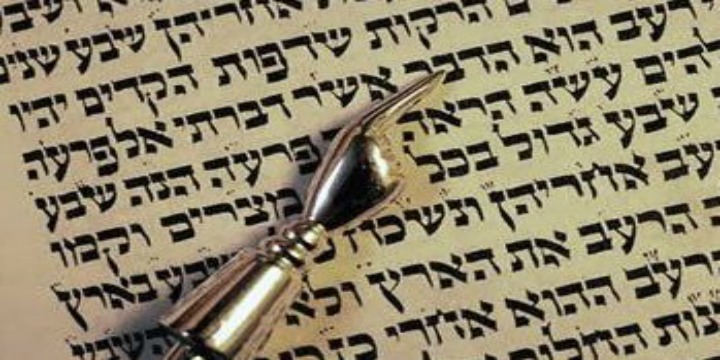
A Torah scroll. Photo: Wikimedia Commons.
Handel’s “Messiah” is one of the great pieces of Baroque oratorial music. George Handel, though born in Germany, became a favorite with British audiences in the 18th century. “The Messiah,” performed first in Dublin, is one of the most popular pieces of Church music of all time. It is a lengthy religious, ideological tour de force. Written initially by Handel as sacred music alone, it was set to words from both the “Old” and the “New” Testaments by Charles Jennen. Over time, it went through several musical changes until its final form entered the musical and theological canon.
What music lover doesn’t recognize the “Hallelujah chorus”? Hallelujah itself is a pure Hebrew word that means simply, “Praise God,” just like Amen has no theological implication other than “I agree.”
At its London performance, King George II rose in appreciation, and of course the rest of the audience followed suit. Even Mozart wrote his own adaptation of “The Messiah” in German. And traditionally, it is still performed every year in many Christian countries at Christmas time.
Another example of Baroque Biblical oratorio is Haydn’s “The Creation.” Written in 1797 and 1798, it depicts and celebrates the creation of the world as found in Bereishit. Haydn was an overlapping contemporary of Handel, and the piece is similar in musical style though not as spiritual.
If you don’t like the Baroque style, I suggest you listen to Verdi’s “Requiem” (which is often referred to as his greatest opera). As a child, I got hooked on Requiems — notably those of Mozart, Saint Saens, Bruckner, and Faure. I loved the music. But I had enormous trouble with the lyrics. They were a combination of a Christian theology that was totally alien to me. Biblical texts that purported to predict Jesus as the Messiah were completely distorted, mistranslated, and anachronistic. Of course, every religion is entitled, as we are, to have their fixed ideas, and see things and interpret them their way.
So while one part of my brain was delighting in the music, another was getting vexed by the mistranslations, interpretations, and theological paradoxes. Can one reconcile these two very different facets of such musical treats? Is one giving one’s assent to another set of religious values and ideas if one is only interested in the sounds, not the words?
Indeed, like admiring architecture, can one not enjoy music without identifying theologically? Isn’t it one of the Hassidic principles that music is neutral and cannot contaminate — which explains why so many Hassidic songs were adopted from non-Jewish tunes.
Another argument I could make is that the Talmud (Brachot 58b) tells us to make a blessing when we see a beautiful person, even if he or she may be either pagan or of questionable morality. In fact, there are different opinions within Jewish law going back to Medieval times as to what constitutes heresy or paganism. In the end, one follows one’s specific authority or custom. We will just have to face the consequences when we face the Divine Tribunal!
The author is a rabbi and writer based in New York.