

Democratic Nominee for University of Michigan Regent Refuses to Condemn Hezbollah
Error: Contact form not found.

 by Corey Walker


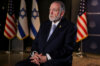
Attorney Amir Makled accepts the Michigan Democratic Party’s endorsement for the University of Michigan Board of Regents in Detroit, Michigan on April 19, 2026. Photo: Andrew Roth/Sipa USA via Reuters Connect
A political controversy is intensifying in the race for a spot on the University of Michigan’s top governing body, as Democratic nominee Amir Makled faces mounting criticism for failing to explicitly condemn Hezbollah, the Iran-backed Lebanese terrorist group responsible for attacks against not only Israel but also Western targets — including US soldiers.
Makled, an attorney who last Sunday secured the Democratic Party’s nomination for a seat on the university’s Board of Regents, has come under scrutiny following the resurfacing of social media activity in which he appeared to engage with or amplify content viewed as sympathetic to Hezbollah and hostile toward Israel.
When asked last week by MLive, a local news outlet, to clarify his views on Hezbollah, a US-designated terrorist organization, Makled deflected and refused to criticize the Islamist group. However, Makled stated that he would continue condemning the Israel Defense Force (IDF).
“I will continue to talk critically of the policies of the Israeli Defense Forces and of the state of Israel,” Makled said. “But I’m not playing a condemnation game of Hezbollah, because I believe that’s a trap designed to put Arab Americans on the defense simply for existing.”
Makled also dismissed the notion that his Jewish opponent in the Democratic primary, incumbent Jordan Acker, lost his reelection bid due to antisemitism.
“Hatred against Jewish people is wrong, period,” Makled said. “Acker didn’t lose because of antisemitism. People are tired of Islamophobia. They’re tired of being told that standing up for Arab lives is somehow disqualified.”
In the two years following the Hamas-led massacre across southern Israel on Oct. 7, 2023, Acker has been targeted by anti-Israel activists with a relentless barrage of protests. In December 2024, for example, pro-Hamas activists targeted Acker’s home with violent demonstrations, breaking his windows and spray-painting his car with the message “Divest Free Palestine.” The vandals also spray-painted on Acker’s car an inverted red triangle, a symbol used to indicate support for the Hamas terrorist group.
The contest has drawn national attention because of the unusually broad authority held by University of Michigan regents, who are elected statewide and oversee the university’s finances, investments, executive leadership, and major institutional policy decisions. The eight-member board plays a central role in decisions ranging from presidential oversight to responses to campus protest movements and demands for divestment.
Makled, a Dearborn-based civil rights attorney who has been outspoken in support of divestment from Israel, won the party’s nomination for one of two regent seats up for election this year, defeating Acker, who had become a frequent target of pro-Palestinian activists over his opposition to the boycott, divestment, and sanctions (BDS) movement against Israel on campus.
Makled initially came under immense scrutiny after an investigation by The Detroit News revealed that he was found to have deleted social media posts praising leaders of Hezbollah. One of the posts referred to slain Hezbollah leader Hasan Nasrallah as a “martyr.” He also reposted antisemitic messages from far-right commentator Candace Owens which referred to Israelis as “demons” who “lie, cheat, murder, and blackmail.”
While Makled has issued statements broadly disavowing antisemitism, his refusal to emphatically denounce Hezbollah has raised eyebrows among moderate Democrats and Jewish voters in Michigan. Jewish organizations and community leaders have expressed alarm over what they describe as a troubling pattern of ambiguity.
The controversy has already had political consequences. A major labor union withdrew its endorsement of Makled, citing concerns over his past rhetoric and associations. Within the Democratic Party, the episode has exposed widening divisions over how to address extremism linked to anti-Israel activism.
The dispute comes amid heightened sensitivities surrounding the ongoing conflict between Israel and Hamas, as well as increased scrutiny of campus climates across the United States. Further, the controversy remains especially sensitive in Michigan, as a Hezbollah-sympathizing terrorist targeted a major synagogue, Temple Israel, in suburban Detroit last month.
Further, higher education institutions like the University of Michigan have faced criticism over their handling of anti-Israel protests, some of which have drawn accusations of crossing into antisemitic territory. Against this backdrop, Makled’s candidacy has become a flashpoint in a broader debate over whether anti-Israel activism is being sufficiently challenged when it veers into support for extremist groups.
Critics note that as a regent, Makled would help oversee university policy, including responses to campus discrimination and student safety concerns. His reluctance to explicitly condemn Hezbollah could raises serious questions among voters about his judgment and fitness for the role.
Makled’s willingness to frame violent anti-Israel protests as a legitimate expression of grievances and expression further casts doubt over whether he would be willing to dispatch law enforcement to control raucous demonstrations on campus.
The controversy underscores a growing tension within Democratic politics, where progressive activism related to the Palestinian cause has, in some cases, blurred lines that critics say should remain clear—particularly regarding terrorist organizations and incitement against Israel. This issue has become more salient in recent months, as Democrats have increasingly cozied up to individuals that espouse extremist beliefs, such as anti-Israel streamer Hasan Piker.
Supporters of Acker have argued the outcome reflects a broader deterioration in support for Israel and tolerance of antisemitism within Democratic politics, particularly among younger and more progressive voters. Some also noted that Paul Brown, Acker’s non-Jewish running mate who had similarly opposed divestment efforts, was renominated while Acker was not, making the result especially symbolic for many Jewish Democrats.