


To Fight Antisemitism, Rebuild the Core Curriculum
Error: Contact form not found.
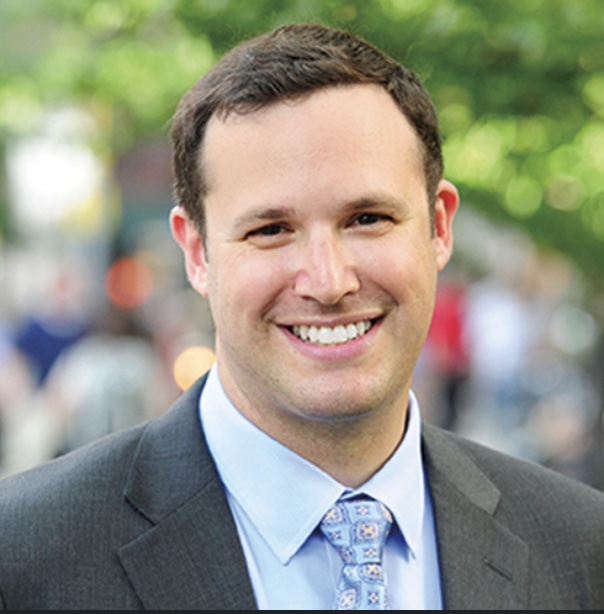
 by Samuel J. Abrams


Illustrative photo of a university classroom. Photo: Public domain.
Walk into almost any college classroom today and try a simple exercise: ask students to explain when, why, and by whom the modern state of Israel was founded.
I tried this recently with a group that was clearly comfortable using the term “settler colonialism” to describe the country. The room went quiet. One student mentioned World War II. Another suggested the British. A third admitted she wasn’t sure but felt strongly about it.
These were intelligent, motivated students. They were not refusing to engage. They were engaging earnestly with a vocabulary they had inherited but never been asked to examine. The problem was not their conviction. It was the absence of anything beneath it.
My anecdote is not the only evidence. The 2025 FIRE College Free Speech Rankings, drawing on more than 58,000 student responses across 250 institutions, found that 55 percent of students said the Israeli-Palestinian conflict was difficult to discuss on their campus – the highest figure ever recorded on any issue in six years of the survey. The students chanting most loudly are not the students reporting that difficulty. The students reporting that difficulty are the recruitable middle: the ones who sense they are missing something but do not know where to begin. The data tells us they are out there in large numbers. The anecdote tells us what they are missing. They are the students a real curriculum could reach.
This is the campus crisis in miniature. The encampments, the shouted-down speakers, the slogans about rivers and seas whose geography their chanters cannot place: these are not the words and work of deeply read ideologues. They are the work of students absorbing claims from professors, administrators, fellow students, activist organizations, and social media without any baseline against which to test them. The committed ideologues – inside the institution and outside it – are not going away easily or quickly. The question is whether the students they are recruiting encounter, somewhere in their four years, the foundation that lets them notice when something is off.
Right now, they rarely do. American higher education has spent four decades dismantling the shared intellectual foundation that once made such noticing possible – the true core curriculum that ensures every student encounters the basic texts, histories, and ideas needed to make sense of the world they are trying to debate.
Our Jewish tradition has always understood that productive disagreement requires a shared foundation. Pirkei Avot distinguishes between machloket l’shem shamayim – argument for the sake of Heaven – and the rebellion of Korach. The disputes of Hillel and Shammai endure because both sides argued from a shared foundation of text and truth. Korach’s challenge is remembered not as productive disagreement but as faction. The difference is not intensity. It is the foundation beneath it. Korach’s mode works on people without grounding; Hillel and Shammai’s is unintelligible without it.
This is what we are watching on campus. The slogans are loud, but they are not arguments in the sense our tradition recognizes. They are assertions made in the absence of foundation – faction, not machloket. And the students absorbing them are not refusing the conditions of real disagreement; they have never been taught that those conditions exist. Without shared knowledge, there is no common language. Without a common language, there is no argument, only assertion. The encampments and the chants are what assertion looks like at scale.
The objection comes immediately: Columbia still has a core. Lit Hum requires Genesis and the Gospels. Contemporary Civilization assigns the Bible alongside Plato, Augustine, Ibn Khaldun, Locke, and Arendt. The texts are there. Students are required to read them. And Columbia was nonetheless an epicenter of the post–October 7 campus collapse.
The lesson is not that core curricula fail. It is that content alone is insufficient. A core taught ironically – treated with contempt or as a relic to be subverted rather than a tradition to wrestle with -will not produce the formation it once did. A required text taught grudgingly by faculty who view it as an artifact of oppression does not do the work the syllabus promises. Rebuilding the core means rebuilding the faculty culture that delivers it. Content is necessary; institutional seriousness is what makes it sufficient. The new programs at Florida, North Carolina, and Arizona State understood this. They built dedicated hiring lines in dedicated units, recruiting faculty whose intellectual commitments matched the project rather than reassigning faculty whose training pointed elsewhere. A real core requires the same.
The case for a core curriculum is more modest than the one usually made. It will not convert the committed activist or persuade the tenured ideologue. It will not stop outside organizations from producing falsified history about Israel, Zionism, or Jewish life. What it does is raise the cost of that propaganda by producing students who know enough to notice when something is wrong. A student who has read the Hebrew Bible, studied the history of the Middle East, and encountered Jewish thought as a living tradition rather than a footnote is not immune to bad arguments, but she is far better equipped to test them.
This is also why the post–October 7 wave of mandatory antisemitism trainings, IHRA workshops, and one-off DEI modules will not solve the problem. Inserting a two-hour training into an unformed mind does not produce the noticing capacity. It produces students who can recite definitions during the workshop and forget them by Friday, because the definitions are not anchored in anything. The same logic applies to the broader menu universities and donors are funding right now – and this is the harder truth for our community to hear: expanded Jewish studies offerings reach the already-interested, and several flagship programs have themselves been absorbed into the framework the core would interrupt. Targeted interventions assume a foundation that no longer exists. Build the foundation, and targeted interventions become unnecessary; skip the foundation, and they become theater.
A real core curriculum is about exposure: to foundational texts, enduring debates, and the accumulated knowledge of civilization. It means basic historical literacy – ancient civilizations, the rise of monotheism, the events shaping the modern world. It means treating Jewish history as world history – from biblical origins through diaspora, emancipation, the Holocaust, and the founding of the State of Israel – as a continuous thread, not a parenthesis. The Hebrew Bible’s influence on the American Founding, Maimonides on Aquinas, Jewish thinkers in the development of modern human rights law: these are not parochial concerns but central threads of the civilization students think they already understand. And it also means religious diverse literacy – serious familiarity with the Hebrew Bible, the New Testament, the Quran, and other major traditions, taught alongside Jewish thought rather than instead of it.
In practice, this is a two to six-course required sequence taken across the first two years; roughly fifteen percent of an undergraduate program. The sequence sits before the major and replaces a portion of current distribution requirements. It is not an addition to the curriculum but a reorganization of what students already take, with the elective buffet narrowed and the shared foundation restored.
None of this is radical. Until recently, it was the baseline of an educated person.
Some institutions still take this seriously. Chicago has run its Common Core since the 1930s. Ursinus requires every undergraduate to take its Common Intellectual Experience. Yale’s Directed Studies is being expanded to meet rising student demand. More telling is the rise of new programs built from scratch. The Hamilton School at the University of Florida now houses the Robert M. Beren Program on Jewish Classical Education, which makes Jewish classical texts and Hebraic ideas a core pillar rather than an elective sidecar. North Carolina has launched a School of Civic Life and Leadership; Arizona State has run its School of Civic and Economic Thought and Leadership for nearly a decade. These programs are imperfect, but they demonstrate that meaningful academic offerings can be built in eighteen months when an institution decides to act.
This is the question our community has to confront honestly. Jewish philanthropy has spent enormous sums in the past two years on antisemitism response: Hillel programming, Israel education, campus security, dedicated Jewish studies chairs, Title VI litigation, monitoring projects. Some of it has worked. Much of it has not. And the highest-leverage move available to Jewish philanthropy right now may not be the obvious Jewish-specific one. The Beren Program at Florida launched with $15 million in philanthropic support; it is now training students who arrive on campus knowing more about Jewish history than most of their professors do. The new schools at North Carolina and Arizona State were built with state appropriations and trustee will. None of these are Jewish-specific projects. All of them do Jewish-specific work because forming students capable of serious thought about anything also forms them capable of serious thought about us.
The reflex is to fund Jewish-specific responses to antisemitism. The harder argument is that the highest-leverage Jewish philanthropic move right now is funding the rebuilding of the general core curriculum at major universities. Chairs in foundational texts. Programs in classical education. Centers that anchor serious engagement with the Western and Jewish traditions together. Not because these projects are Jewish, but because they form the soil in which serious thought about Jewish history, Israel, and Zionism can take root and in which the lies our students are being fed become harder to plant. We have the resources. The question is whether we have the institutional patience.
In theory, this work should begin earlier. In practice, K–12 education is too politicized to sustain a shared curriculum. California’s ethnic studies experience is the cautionary tale: the initial mandate was widely condemned for antisemitic content, and even after revisions the so-called “Liberated Ethnic Studies” movement produced classroom materials that have generated lawsuits and settlements. New York has required Holocaust instruction since 1994, yet a 2022 law was needed simply to verify whether districts were complying. K–12 reform is necessary, but it will not be swift or clean. Higher education is different. Trustees, presidents, and faculty senates retain genuine curricular autonomy. The barrier is not law. It is institutional will; a hard problem, but a solvable one.
Defenders of the current system frame open-ended choice as empowering. In practice, an education composed entirely of choices is not an education at all. It is a collection of experiences. The core curriculum was never about limiting freedom. It was about ensuring that freedom rested on a foundation. And contrary to the assumption that students would resist a more demanding model, the evidence points the other way. Yale’s Directed Studies is oversubscribed. Hamilton at Florida drew hundreds of applicants for its inaugural class. The demand is there. What is missing is the institutional will to meet it.
Knowledge does not guarantee agreement. But it makes serious disagreement possible again—the difference, again, between Hillel and Korach. Trustees, presidents, and faculty can act now. Foundations, particularly within our community, can accelerate the work. The K–12 fight should continue, but no one should wait on it.
Rebuild the core, and you don’t just improve education. You make the lies harder to tell and harder to believe. You give the next generation of students the foundation our tradition has always known is the precondition for argument worth having. We have spent two years asking how to fight antisemitism on campus. The deepest answer is also the oldest: rebuild the conditions in which machloket l’shem shamayim is possible again, and the rest follows.
Samuel J. Abrams is a professor of politics at Sarah Lawrence College and a senior fellow at the American Enterprise Institute


