



German Jewish Woman Forced to Remove Star of David Necklace to Enter Courtroom — for Trial on Excluding Jews
Error: Contact form not found.

 by Ailin Vilches Arguello


Illustrative: Bondi shooting survivor Chaya Dadon, 14, holds a pendant, in the shape of Israel, and a partial Star of David engraved on it, that she bought a few hours before the shooting in Sydney, Australia, Dec. 19, 2025. Photo: Reuters/Cordelia Hsu
A German Jewish woman was forced to remove her Star of David necklace at a security checkpoint before being permitted to enter a courtroom in northern Germany — where ironically a man was on trial for excluding Jews from his place of business.
The incident on Monday raised concerns over hostility toward Jews in public spaces, amid a wave of incidents in Germany and across Europe of people being denied access to places and services for being Jewish or Israeli.
On Monday, Keren Stopka was asked before entering the Flensburg District Court in the northern state of Schleswig-Holstein to remove her Star of David necklace so as not to “disrupt” the proceedings, in order to be allowed to observe the case.
“I had to remove my entire Star of David necklace and hand it over. I wasn’t even permitted to keep it under my shirt or in my pocket. I can’t remember the last time I took it off — it’s part of who I am,” Stopka told the German newspaper Bild.
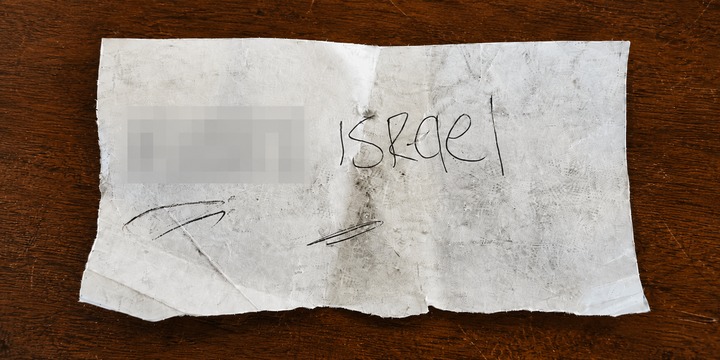
In that courtroom, 60-year-old Hans-Velten Reisch was on trial for incitement to hatred after he hung an antisemitic sign on his second-hand shop last year that read: “Jews are not allowed to enter this place!!!”
“Nothing personal, no antisemitism. I just can’t stand you,” the sign further said.
Reisch was sentenced to a six-month suspended prison term, meaning he will not serve time in prison unless he commits another offense during a probationary period.
According to court documents, the judge determined that Reisch’s conduct did not fall under protected freedom of expression but instead constituted “incitement to hatred.”
The ruling found that displaying such a sign amounted to an act of hostility against Jews in Germany, undermining their human dignity by exposing them to contempt and discriminatory treatment.
“He knew what he was writing. The sign was deliberately intended to evoke memories of the Nazi boycott slogans directed against Jewish businesses,” the judge said during the proceedings.
As part of his probation, the court also ordered the defendant to pay 1,200 euros to the Ladelund concentration camp memorial.
After admitting to hanging the sign, Reisch expressed remorse for his actions and said he had not intended to offend the Jewish community, pledging to refrain from similar conduct in the future.
However, he had previously argued during police questioning that he had decided to post the sign because the Jews he knew had not opposed the war in Gaza.
At the time, he ended up removing the sign from the store window only after local police explicitly ordered him to do so, later attempting to hang it inside the shop instead.
During the trial, Reisch acknowledged that he had wrongly generalized and should have distinguished between individuals with differing views on the conflict.
In another shocking incident, Israeli travelers attempting to book a hotel in southern Germany via the Booking platform received an openly antisemitic message stating they were not allowed to stay because they were Jewish.
“Sorry, there are no Jews allowed in our hotel,” read the message an Israeli couple received last week.
After they filed a complaint with Booking, the hotel Zum Hirschen — located near the town of Lam, close to Bavaria’s border with the Czech Republic — was removed from the platform.
Local authorities in Bavaria are now reviewing the incident to determine whether there are grounds for legal action and whether the hotel’s conduct breached applicable anti-discrimination regulations.
Talya Lador, Israel’s consul general in Munich, condemned the incident, calling for accountability and warning that such discriminatory conduct cannot be ignored.
“Are we back in the 1930s? I am glad Booking removed this hotel from its platform,” the Israeli diplomat wrote in a post on X.
Sind wir wieder in den 1930er Jahren? Ein Hotel hat einem Israeli folgendes geantwortet: „sorry, there are no Jews allowed in our hotel“.
Ich bin froh darüber, dass @bookingcom dieses Hotel von seiner Homepage verbannt hat. pic.twitter.com/3hiBEK1dse— Talya Lador (@TalyaLador) June 2, 2026
Similar incidents of exclusion have been occurring elsewhere in Europe. On Sunday, a Barcelona spa apologized after two Jewish American women were denied entry to an LGBTQ sauna over their Star of David necklaces.