


The Students Are Consoling Us Now
Error: Contact form not found.
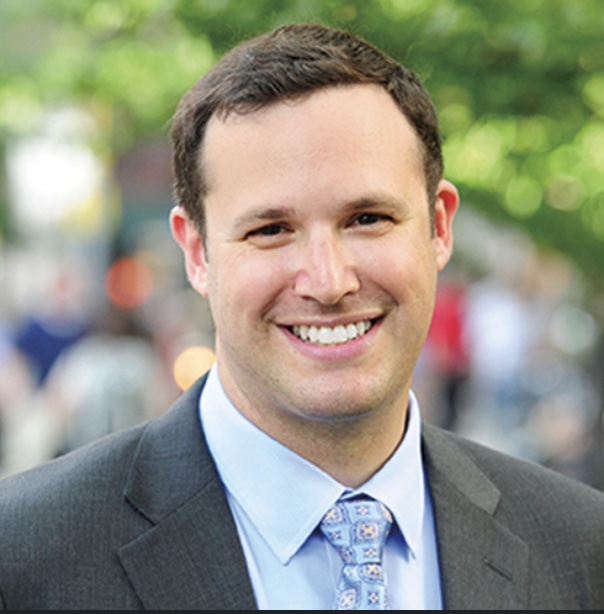
 by Samuel J. Abrams


The Sarah Lawrence campus. Photo: Wiki Commons.
Sarah Lawrence’s commencement this year was a flat, joyless affair – few cheers, no hats in the air, a visible law enforcement presence, and a graduate student speaker who concluded her remarks by shouting “Free Palestine” from the platform while President Cristle Collins Judd, seated near her, said nothing. About a week later, a graduated senior wrote to me. Her note apologized for being slow to reply. Then it apologized for something else.
“I am really sorry about what happened at graduation,” she wrote. “That is so disgusting. I really have no words to say about the antisemitism at SLC. In that regard I am glad to be leaving and sorry that you are staying.”
I have read that last sentence a dozen times. Glad to be leaving and sorry that you are staying. It is the most honest assessment of the institution’s climate I have received in years, and it came from a twenty-two-year-old who had just paid roughly a quarter of a million dollars to be educated there.
She is not the only one. Emilyn Toffler, the Jewish student who spent his senior year trying to bring a J Street U chapter to Sarah Lawrence – only to be told by the Student Senate that approving a liberal Zionist club would be like approving “a white supremacist organization” – told the Jewish Telegraphic Agency, on the eve of his own graduation: “I also worry for the next generation of Sarah Lawrence students. Who’s going to be there for them as they strive to express opinions that differ from the mainstream on campus? I don’t know.”
Two graduating Jewish seniors. Independently. Ending their Sarah Lawrence careers by expressing concern for the people they are leaving behind. That is no longer one student’s note. That is a pattern. And when the people leaving start worrying about the people staying, the institution has stopped forming students and started teaching them to escape it.
Think about what these sentences contain. A moral judgment about the institution they just graduated from. A recognition that the adults charged with their formation did not, in the end, protect particular students on campus. And – most striking – a tender, almost protective concern for the people left behind: in one case, the Jewish faculty member; in the other, the Jewish students coming next.
This is not how it is supposed to work.
In a healthy academic community, care runs from the institution outward to the student. The college takes in eighteen-year-olds and returns them, four years later, as citizens – formed by mentors, shaped by argument, habituated to the trust that mediating institutions cultivate. That is the Tocquevillian bargain: the professor guides, the dean reassures, the president defends the integrity of the ceremony when a graduate student turns the platform into a hateful megaphone. The institution holds the line so the young people inside it can do the harder work of becoming themselves.
At Sarah Lawrence, that direction has reversed. The students are the ones offering consolation.
The load-bearing fact is administrative silence – sustained, deliberate, and by now well documented. In January, Ezra Klein was shouted down as a “Nazi normalizer”; Judd, seated beside him, offered only “Welcome to Sarah Lawrence.” When the Student Senate rejected J Street U, college administration declined to intervene, though the bylaws explicitly authorized the administration to act “when it is in the best interests of the college” and faculty had delivered a petition asking her to do so. At commencement, when the graduate student speaker shouted a political slogan from the platform, Judd said nothing. Behind all of it, the House committee report that surfaced internal emails in which the dean of students dismissed the local Hillel director’s concerns as “exaggerated and alarmist.”
The issue was not merely a slogan. It was the setting. Commencement is one of the few moments in the life of a college when the institution speaks in its official capacity. The platform belongs not to a movement but to the community as a whole. When a political slogan becomes the ceremony’s final note and college leadership offers no response, students draw their own conclusions about whose concerns matter and whose do not.
This is not a series of unfortunate moments. It is a leadership posture, applied consistently, regardless of the cost. And the cost is now visible in the goodbye emails of graduating Jewish seniors.
What strikes me most is not what was done to me, or to the faculty receiving these notes. It is what was taken from the students themselves. A four-year liberal arts education is supposed to produce young adults who trust institutions enough to build them, repair them, and pass them on. These graduates will not. They have learned that the institution is something to survive rather than something to belong to. They have learned that, in extremis, the adults will not defend them. They have learned that Jewish life on the Sarah Lawrence campus is not something the college will protect. They graduate having metabolized a single lesson about institutions: get out, and feel sorry for the people who can’t.
That is the opposite of civic formation. It is anti-formation: the training of young people not to trust institutions, but to endure them. The failure here is not merely administrative. It is educational.
The Jewish tradition has a phrase for what a learning community is supposed to be: beit midrash, the house of study. The beit midrash works because obligation runs in both directions. The teacher owes the student rigor, attention, and protection. The student owes the teacher seriousness, engagement, and – l’dor v’dor, from generation to generation – the carrying forward of what was taught. The relationship is asymmetric in care but reciprocal in commitment. The adults shield. The young people grow. Then the young people become adults and shield in turn.
What these farewells describe is a beit midrash with its directionality scrambled. The students are shielding us. They are the ones offering care, the ones worrying about who will be there for the next cohort. The asymmetry has been inverted because the institution itself has abdicated its half of the bargain.
Here is what comes next, and it is worth saying plainly. Sarah Lawrence’s administration will produce, over the coming months, statements about belonging, community, and dialogue. They will be carefully composed. They will be circulated to alumni and parents. And they will fail – not because the words are wrong but because the students who actually belonged are already walking out the door, looking back over their shoulders, and apologizing to us for what was done in their name.
The deepest tragedy is not only the incidents themselves, grim as they are. It is what they taught. A generation of Jewish students at Sarah Lawrence has learned that the institution will not be there for them. They have learned to leave. They have learned to worry about the adults left behind. And they have learned, most painfully, that the place meant to form them into citizens of institutions instead taught them how to become refugees from one.
Colleges are supposed to leave graduates feeling grateful, nostalgic, perhaps even sentimental. It is difficult to imagine a more damning verdict than a student reaching commencement and concluding that she is relieved to leave and sorry for those who remain.
Institutions spend generations building trust and only a few years teaching students to live without it. Sarah Lawrence has begun teaching the second lesson, and we will be living with the consequences for a long time.
Samuel J. Abrams is a professor of politics at Sarah Lawrence College and a senior fellow at the American Enterprise Institute.