









Iran ‘Opens New Chapter in Its Defense Policy’ With Attack on Israel: Top Official
Error: Contact form not found.

 by Ailin Vilches Arguello

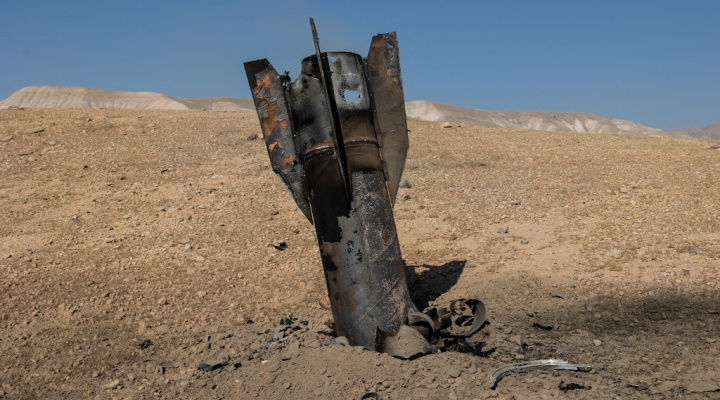
Part of a missile protrudes from the ground, following strikes from Iran, in the central West Bank, June 8, 2026. Photo: REUTERS/Naama Stern
Iran’s latest attack against Israel on Monday marked the start of a “new chapter” in the Islamist regime’s defense policy, according to a top Iranian official, who warned that Tehran would respond with military force to any strikes against its network of terrorist proxies across the Middle East.
Sadeq Amoli Larijani, chairman of Iran’s Expediency Discernment Council — a powerful advisory body to Supreme Leader Ayatollah Mojtaba Khamenei — said Tehran’s attack on Israel, carried out in support of the Lebanese terrorist group Hezbollah, was “not merely a military response” but the launch of a new “strategic doctrine.”
“Should an attack occur against any pillar of the axis of resistance, the response will extend beyond geographic borders and reshape regional equations,” Larijani wrote in a post on X. “The Islamic Republic has shown that any expansion of the conflict or strike on Iran’s vital infrastructure will be met with a comprehensive and deterrent response.”
“Tehran has opened a new chapter in its defense policy — one in which the preservation of regional power is no longer a reactive stance in the face of threats but is instead pursued through proactive initiative and offensive capability,” he continued.
The Iranian official further warned that any future military response could broaden to encompass all actors supporting or facilitating confrontation with the regime.
حمله ایران در دفاع از لبنان، صرفاً یک پاسخ نظامی نبود؛ بلکه اعلام رسمی یک دکترین راهبردی بود.
این اقدام پیام روشنی داشت که چنانچه تعرض به یکی از اضلاع محور مقاومت صورت پذیرد، پاسخی فراتر از مرزهای جغرافیایی در پی خواهد داشت و معادلات منطقه را دگرگون خواهد کرد.
همزمان، ایران آشکار…— صادق آملیلاریجانی (@AmoliLarijaniir) June 8, 2026
On Monday, Iran’s military announced that its initial wave of strikes against Israel — the first since the April ceasefire took hold — was now over, while warning that operations could resume if the Jewish state continued attacks on the regime’s chief proxy force, Hezbollah, in Lebanon.
Iranian officials said Tehran had “delivered a painful response” to Israel over its strikes on its northern neighbor, including Sunday’s attacks on the outskirts of Beirut.
So far, Israel has not publicly responded after launching retaliatory strikes on Iran following Tehran’s missile barrage.
Israeli officials said the country is prepared for a range of military options against Iran — from operations lasting several days to “as long as it takes” — adding that Israeli strikes had already hit Iranian air-defense systems being rebuilt after earlier attacks, as well as a petrochemical facility.
Earlier, US President Donald Trump demanded that Israel and Iran “immediately stop ‘shooting,'” after the latest wave of attacks sent oil prices surging nearly 4 percent and threatened to undermine US-led efforts to secure a broader ceasefire agreement.
In one of several posts on social media, Trump said Israel and Iran both wanted “an immediate CEASEFIRE!”
“Final negotiations on ‘Peace’ are proceeding, subject to ignorance or stupidity getting in its way,” he wrote in a post on TruthSocial.
Trump also said the US blockade on Iranian ports would remain in effect until a final agreement is secured.
According to Iranian Foreign Ministry spokesperson Esmaeil Baghaei, Tehran remains in contact with Washington in an atmosphere of “extreme suspicion” as diplomatic efforts continue amid fears of a broader regional war.
Baghaei said Israel’s operations in Lebanon — whether conducted with direct US coordination or not — were intended to sabotage ongoing negotiations and push the region closer to wider conflict.
“The United States bears direct responsibility for any action the Zionist regime [Israel] takes in relation to violating regional peace and security against Iran,” the Iranian official said.
Hezbollah, which like the Iranian regime openly seeks Israel’s destruction, has been firing rockets and drones at northern Israeli communities daily since early March, when the terrorist group first opened fire on the Jewish state in response to the joint US-Israel attack on Iran days earlier.
Iran has attempted to make an Israeli ceasefire in Lebanon, where Hezbollah exerts significant political and military influence, part of any deal to stop fighting with the US.


