






When Did Tucker Carlson Decide That ‘America First’ Means Supporting Iran?
Error: Contact form not found.

 by Ben M. Freeman


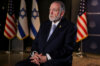
Tucker Carlson speaks at Indiana University in Bloomington, Indiana, Oct. 21, 2025. Photo: Gage Skidmore/ZUMA Press Wire via Reuters Connect
In 2012, Tucker Carlson described the Islamic Republic of Iran as “evil” and its leaders as “lunatics.” He even argued that the Iranian regime “deserves to be annihilated.”
At the time, Carlson recognized a reality that remains unchanged today: the Islamic Republic is not a normal state pursuing normal state interests. It is a revolutionary regime built on repression, proxy warfare, and regional destabilization.
What makes Carlson’s evolution particularly striking is that he is often presented as one of the leading voices of the America First movement. Iran is not merely an adversary of Israel. For nearly half a century, the Islamic Republic has defined itself in opposition to the United States, funded groups responsible for killing Americans, attacked American interests across the Middle East, and built a foreign policy around hostility toward both Washington and its allies.
Yet Carlson increasingly directs his criticism toward those confronting the regime and its proxies rather than toward the regime itself.
The contradiction is not simply with Carlson’s earlier views on Iran. It is with the political worldview that made him one of the most influential voices in the America First movement. How does a movement built around defending American interests end up minimizing the threat posed by a regime whose leaders still lead crowds in chants of “Death to America”?
The Iranian regime is a revolutionary theocracy built on repression at home and destabilization abroad. Inside Iran, the regime suppresses dissent, imprisons political opponents, censors information, persecutes minorities, and denies millions of its own citizens basic freedoms. Journalists face intimidation and imprisonment. Women who challenge compulsory hijab laws face arrest and violence. Protest movements are crushed with remarkable brutality. For nearly half a century, the regime has prioritized ideological control over the well-being of its own population while enriching the institutions responsible for maintaining its grip on power.
Nor is the regime’s conduct confined to its own borders.
Since 1979, the Islamic Republic has pursued a strategy of projecting power through proxies and allied militias across the Middle East. Rather than confronting its enemies directly, Tehran has spent decades building armed organizations capable of advancing Iranian interests while providing a degree of plausible deniability. This strategy is not incidental to the regime. It is central to how it operates. The regime seeks regional influence, the export of its revolutionary ideology, and the destruction of Israel. It has spent decades constructing the military and political infrastructure necessary to pursue those objectives.
The Purpose of Hezbollah
No organization better illustrates the contradiction in Carlson’s position than Hezbollah. Iran helped create Hezbollah, finances it, arms it, trains it, and coordinates with its leadership. Hezbollah’s military capabilities exist because Tehran wants them to exist.
Commentators speak as though Hezbollah exists to defend Lebanon. The evidence points in the opposite direction. From Tehran’s perspective, Hezbollah exists to advance Iranian interests. It provides leverage against Israel, allows Iran to threaten its adversaries without exposing itself directly to retaliation, and extends Iranian influence into the Levant.
This tendency to treat Hezbollah as a legitimate Lebanese political actor rather than an Iranian proxy is increasingly common. In a recent interview, Tucker Carlson gave a remarkably sympathetic hearing to arguments that Hezbollah represented the best hope for political consolidation in Lebanon. His guest, former State Department official Lawrence Wilkerson, went so far as to suggest that Israel’s killing of Hezbollah leader Hassan Nasrallah had deprived Lebanon of the opportunity to unite under a leadership capable of commanding broad public support.
For a commentator who built his reputation warning Americans about hostile foreign powers and the threats they pose, the exchange was striking. Hezbollah is not merely a Lebanese political movement. It is one of the principal instruments through which the Islamic Republic projects power across the Middle East.
Yet Carlson offered little challenge to the premise. Instead, the discussion proceeded as though Hezbollah could be understood separately from the regime that created it. That is precisely the contradiction. If the Islamic Republic is the dangerous revolutionary regime Carlson once described, then Hezbollah is one of the primary ways that danger manifests itself. To treat Hezbollah as an independent actor is to obscure the role Iran plays in projecting power throughout the Middle East.
The Contradiction
This is where Tucker Carlson’s position becomes impossible to reconcile with his earlier understanding of Iran.
In 2012, he recognized that the Islamic Republic was not a normal government pursuing normal interests. He described it as evil because he understood that it was a revolutionary regime seeking to reshape the Middle East through violence, intimidation, and proxy warfare.
Yet today, he frequently speaks about conflicts involving Iran and its proxies as though they can be understood separately from the regime that created them. Hezbollah is not an independent actor that merely shares some interests with Tehran. It exists because Tehran built it. Its weapons, training, funding, and strategic purpose derive from the Islamic Republic. To discuss Hezbollah while minimizing the role of Iran is to discuss the symptom while ignoring the disease.
That is the contradiction at the heart of Carlson’s position. Either the Islamic Republic is the dangerous revolutionary regime he once said it was, or it is not. If it is, then its proxy network represents one of the principal ways in which that danger manifests itself. If it is not, then Carlson’s earlier warnings were wrong. Both positions cannot be true simultaneously.
What makes Carlson’s evolution particularly troubling is that it obscures the nature of the threat facing the region. The victims of the Islamic Republic span the entire Middle East. They are Israelis hiding in bomb shelters. They are Iranians denied freedom by their own government. They are Lebanese civilians forced to live under the shadow of Hezbollah. They are Syrians, Iraqis, and others whose countries have become arenas for Iranian influence and proxy warfare. Every attempt to separate Hezbollah from Tehran, or to minimize the role Iran plays in regional instability, serves the interests of the regime itself.
That is more than a personal contradiction. It is a political one. Carlson built his reputation warning Americans about elites who failed to recognize threats to American interests and security. Yet when confronted with a regime that has spent decades funding anti-American terrorism, attacking American allies, and pursuing a foreign policy explicitly hostile to the United States, he increasingly directs his skepticism elsewhere.
Whatever America First means, it cannot mean treating one of America’s most committed adversaries as though it is simply another misunderstood actor in the international system. If the Islamic Republic remains the evil and dangerous regime Carlson once said it was, then minimizing the role of its proxies and obscuring the nature of the threat they pose is not America First. It is the abandonment of the very premise that made Carlson influential in the first place.
Founder of the modern Jewish Pride movement, Ben M. Freeman is the author of Jewish Pride: Rebuilding a People (2021), Reclaiming our Story: The Pursuit of Jewish Pride (2022) and The Jews: An Indigenous People (2025). Educating, inspiring and empowering, his work focuses on Jewish identity and historical and contemporary Jew-hatred. A Holocaust scholar for over fifteen years, Ben came to prominence during the Corbyn Labour Jew-hate crisis in the UK and quickly became one of his generation’s leading Jewish thinkers and voices against Jew-hate. The author is a contributor to HonestReporting, a Jerusalem-based media watchdog with a focus on antisemitism and anti-Israel bias — where a version of this article first appeared.


