



Hezbollah Rejects US-Brokered Israel-Lebanon Security Deal as ‘Surrender’
Error: Contact form not found.

 by Reuters and Algemeiner Staff

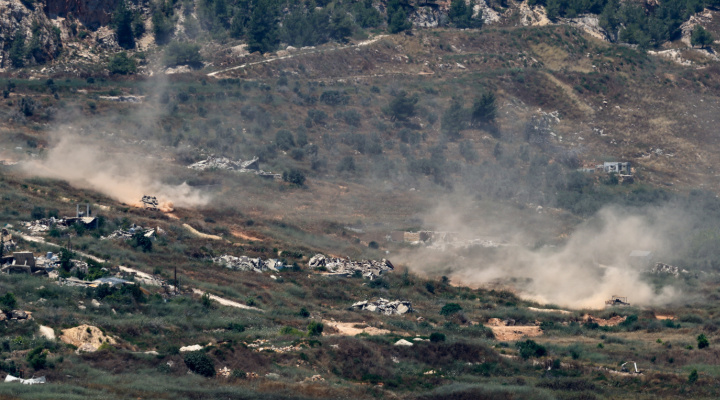
Israeli tanks maneuver in Lebanon, after Israel and Lebanon signed a framework agreement following US-mediated talks, as seen from northern Israel, June 27, 2026. Photo: REUTERS/Amir Cohen
Hezbollah leader Naim Qassem rejected a US-brokered security agreement between Lebanon and Israel on Saturday a day after it was signed, describing it as a surrender to Israel.
In the latest example of ongoing hostilities despite repeated ceasefires and agreements, Israel launched a drone strike in Lebanon‘s south on Saturday.
More than a million Lebanese have been driven from their homes by a conflict that has run in parallel with the wider Iran war. Hezbollah and Iran say Washington pledged to end hostilities in Lebanon as part of its memorandum of understanding signed two weeks ago to end the wider war.
The framework agreed on Friday provides for a phased Israeli withdrawal from some parts of southern Lebanon, alongside the deployment of the Lebanese army. But Israeli forces would be permitted to remain in an expanded security zone for the time being.
In a statement, Qassem called it “null and void,” and accused the Lebanese government of making unilateral concessions and undermining Lebanon‘s sovereignty.
He criticized provisions linking Israel‘s withdrawal to Hezbollah‘s disarmament, saying they effectively legitimized Israel‘s military presence and crossed “all red lines.”
The Iran-backed terrorist group would continue its armed resistance, he added: “We did not leave the battlefield in the most difficult circumstances, and we will not leave it.”
With hundreds of thousands of Lebanese, mainly Shi’ite Muslims, still unable to return to homes in Israeli-occupied areas, anger over the agreement spread beyond Hezbollah to Shi’ites more widely. The Amal movement of Lebanon‘s highest-ranking Shi’ite politician, parliamentary speaker Nabih Berri, denounced the agreement as unbalanced, and said it would entrench conditions favouring Israel.
Israel‘s Defense Minister Israel Katz praised the framework agreement, saying it permits Israel to maintain its occupation of a so-called security zone in Lebanon and bars the return of displaced residents.
Israeli Prime Minister Benjamin Netanyahu, in a speech on Saturday, showed a map of the two “pilot zones” that Israel had agreed to eventually hand over to the Lebanese army as part of the agreement. One of them was entirely outside of the area that Israeli troops occupy, while the other was on the edge of the expanded occupation area Israel announced last week.
ISRAELI DRONE STRIKE ON LEBANON
Lebanon‘s state news agency said an Israeli drone struck Nabatieh al-Fawqa on Saturday. The area is outside the security zone shown on a map published by Israel of the territory its troops will continue to control.
The Israeli military told Reuters it had carried out the strike, using a drone, because it had no troops in the immediate area. It said it targeted an individual who posed a threat to its forces, without giving further details or evidence.
Qassem said the Iran-US memorandum of understanding reached earlier this month, which guarantees Lebanon‘s territorial integrity, should serve as the basis for ending the conflict, rather than Friday’s Washington agreement.


