









There Is No More Hospitable City
Error: Contact form not found.
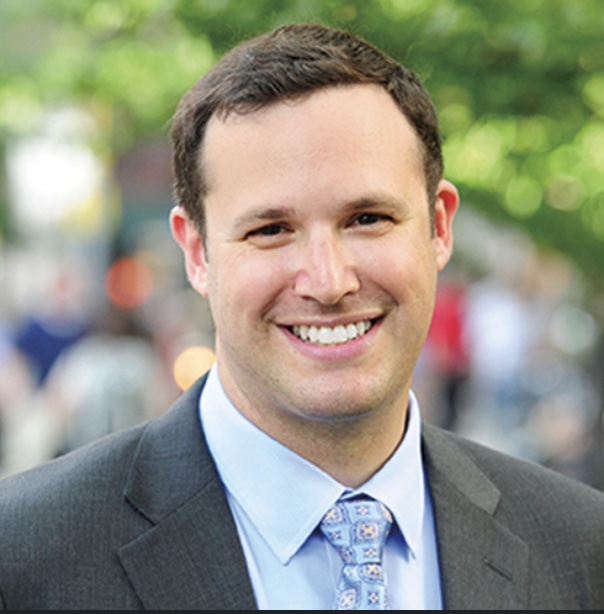
 by Samuel J. Abrams


Democratic candidate for New York City mayor Zohran Mamdani reacts after winning the 2025 New York City Mayoral race, at an election night rally in the Brooklyn borough of New York City, New York, US, Nov. 4, 2025. Photo: REUTERS/Jeenah Moon
After candidates aligned with the Democratic Socialists of America swept New York’s Democratic primaries last week, the writer David Frum captured the strangeness of the moment in a single satirical line, describing the victors as settler-colonialists imposing alien rule on the indigenous inhabitants of Queens, Brooklyn, and the Bronx. It was a joke at the expense of the left’s own vocabulary, and it traveled fast. But the most revealing thing was not the post. It was one of the replies.
Addressing Jews directly, a user named Russell Drew offered what he plainly meant as friendly counsel: you had a good run in New York for a century and a half, and it may be time to find a more hospitable political environment, because this one is turning hostile. It is a sentiment one now hears often, and it deserves a direct answer, because it rests on a fool’s assumption: Jewish security has never been a matter of geography – of finding the right address or relying on the goodwill of the right neighbors. Little in our history has been less reliable.
The search for a more hospitable place is not a strategy. It is an admission that no strategy exists. The communities that endured were not the ones that found the friendliest hosts but the ones that built institutions strong enough to outlast a host’s change of mood. Where Jews flourished, it was rarely because they were welcomed and left alone. It was because they organized – schools, mutual-aid societies, congregations, charities, newspapers, and political associations dense enough to make a community legible, durable, and hard to push around. Hospitality that depends on someone else’s goodwill is not security. It is a lease, and leases are not renewed at the tenant’s choosing.
It is worth being precise about what this moment is, and what it is not. Jew-hatred is not new; it is the oldest of prejudices, and many of our grandparents and great-grandparents knew it in forms far deadlier than anything in New York today – the pogroms of the Russian Pale, the state-decreed persecutions of a darker European century. But those horrors shared a feature this one does not: they were ordered, organized, or quietly tolerated by the state itself. What confronts New York’s Jews now is ugly enough, and government could do far more to confront it, but no state is orchestrating it. That distinction changes everything. What is at stake here is not survival but representation, and beyond representation the American idea itself – the ideals that make Jews not guests in this republic but full participants in its civic life. That is not a cause from which one flees. It is one our people helped build, and have fought for before, and can fight for again.
Which returns us to what actually happened last week, because it is widely misread. Begin with the arithmetic. Citywide turnout ran to roughly seventeen percent of active Democrats, and the night’s marquee upset – the ouster of a five-term incumbent who chairs the Congressional Hispanic Caucus – was delivered by barely seven percent of the district’s voters, some thirty-three thousand ballots out of nearly half a million. One veteran analyst’s verdict was blunt: the socialists have proved they can win primaries where almost no one turns out. A committed, organized faction did not capture the party because New York agreed with it; it captured the party because it was the only side that showed up, its margins powered by a narrow slice of young, college-educated voters rather than any broad popular tide. That is not a hostile city overpowering its Jews. It is an empty field claimed by the few who bothered to cultivate it. When an election turns on numbers this small, participation is the margin.
None of this is to wave away what is real. The campaign that produced these results was not a polite disagreement about housing policy. Candidates who called Israel’s war a genocide and treated Zionism itself as disqualifying did not merely win seats; they made a sizable share of the city’s Jews wonder, for the first time in a long while, whether they still belong here. That fear is not paranoia, and it should not be lectured away. But look hard at what the numbers say about it. A politics this hostile did not command New York; it commanded a primary – a sliver of a sliver, on a quiet Tuesday, while the majority that finds it repellent stayed home. The hostility is real. Its mandate is manufactured.
The hollowness runs deeper than any single race. A recent poll found that only about 40 percent of New York’s registered Democrats consider themselves proud members of the party; nearly as many say they registered only because the city’s closed primaries leave no other way to cast a meaningful vote. New York is full of phantom Democrats who wear the label the way a commuter carries an E-ZPass – not out of loyalty, but because there is no other lane. A party that hollow is not a fortress; it is a vacuum, and a committed few will always rush to fill it.
Here is the uncomfortable part, and it is not about our enemies. New York Jews have long exercised influence out of all proportion to our numbers; not because we were many, but because we were organized. That success bred complacency; we came to assume that our institutions, our alliances, and the goodwill of our neighbors would sustain themselves without effort. They do not. The activists who prevailed understood the one thing we let ourselves forget: politics rewards those who show up, who canvass, who sit through the dull meetings, who vote in the low-turnout contests where everything is actually decided. And this should shame us out of our paralysis, because no people on earth is better equipped for the work. We are, at our best, a nation of mediating institutions – the synagogue, the day school, the federation, the chevra kadisha – the little platoons that Tocqueville saw as the genius of American democracy and that Burke understood as the seedbeds of public affection. We did not lose that capacity. We allowed it to atrophy.
The most fitting answer to that counsel came not from a pundit but from the man who lost. In his concession, Representative Dan Goldman – a Jewish Democrat unseated in the same sweep, who said he had heard antisemitic tropes on the trail himself – refused to urge retreat. He called instead on everyone, Jews and their neighbors alike, to lean in and speak out even when it is not politically expedient, lest those tropes corrode the democracy from within. The defeated congressman grasped what the comfortable spectator missed: you do not answer hostility by surrendering the field to the hostile.
And here the honest word is that showing up, by itself, is not enough. The socialists did not win a single Tuesday; they built toward it for years – chapters and canvasses, candidate pipelines, the patient accumulation of people who could be counted on. To answer an organized movement requires building an equally organized one: not attendance but construction. That is harder than voting once in alarm, and it is precisely the work at which Jews have historically excelled, because our institutions were never mere machines for mobilizing voters. They form citizens, generation after generation, l’dor v’dor. The tools are not exotic. Run for the county committee and the community board. Recruit, fund, and train candidates before the activists do. Fill the meetings we are counted on to skip. And do it in the spirit our tradition prizes – machloket l’shem shamayim, dispute for the sake of Heaven, the argument that strengthens a community rather than dissolving it. None of it is glamorous. All of it is how power is actually held.
Consider what the call to leave so casually waves away. The good run New York Jews enjoyed was never a gift of friendly neighbors; it was an achievement. Immigrants who arrived with nothing on the Lower East Side, in conditions far harsher than anything we face now, did not go looking for a more welcoming city. They built one where they stood—mutual-aid societies and landsmanshaftn, newspapers and unions, day schools and synagogues and political clubs, a civic world so dense that a despised minority became, within a generation, impossible to ignore.
They did not find a more hospitable city. They made one and then they refused to leave it. That is the whole of the answer to Russell Drew and to everyone who counsels departure. There is no more hospitable city waiting somewhere over the horizon; there never was. There is only the city a people is willing to build and willing to defend. The question this election puts to New York’s Jews is not whether the city has turned against them. It is whether they still remember that the most hospitable city on earth is the one you build yourself, and stay to defend.
Samuel J. Abrams is a professor of politics at Sarah Lawrence College and a senior fellow at the American Enterprise Institute.


