




Israel’s Earthquake Relief Mission in Venezuela Returns Home After Weeks of Aid Efforts and Reconstruction Support
Error: Contact form not found.

 by Ailin Vilches Arguello


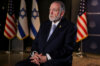
Venezuelan interim President Delcy Rodríguez meets with Israeli officials following the completion of a humanitarian relief operation focused on supporting the country’s recovery efforts after the earthquakes. Photo: Screenshot
Israel’s earthquake-relief delegation has returned home after nearly three weeks in Venezuela, leaving behind a national recovery plan, continued technical support, and an unexpected diplomatic opening between two countries that have had no formal relations for 17 years.
Ahead of the delegation’s departure, acting Venezuelan President Delcy Rodríguez met with representatives of the Israel Defense Forces and Foreign Ministry to thank them for their work following the devastating twin earthquakes that struck the country on June 24.
The Israeli team presented Rodríguez with key elements of a recovery plan developed jointly with Venezuelan authorities. Israeli experts will continue advising the government remotely as reconstruction efforts move forward, according to Israel’s Foreign Ministry.
The conclusion of the mission capped an unusual episode of cooperation between Jerusalem and Caracas. Venezuela severed diplomatic relations with Israel in 2009 under then-President Hugo Chávez, becoming one of Israel’s most strident opponents in Latin America.
Despite that history, Venezuelan officials requested Israeli assistance after earthquakes measuring magnitudes 7.2 and 7.5 struck within seconds of each other, devastating Caracas and the neighboring coastal state of La Guaira.
Israel initially deployed roughly 30 personnel from the Foreign Ministry, IDF Home Front Command, and National Emergency Management Authority. Another approximately 20 specialists worked from Israel, analyzing information gathered in the field and helping formulate the reconstruction strategy.
Unlike Israeli teams sent abroad primarily to pull survivors from rubble, the delegation concentrated on the difficult next stage of disaster recovery: determining which damaged buildings remained safe, which could be repaired, and which needed to be demolished.
Israeli engineers conducted site visits, briefed residents on the condition of their homes, and helped local authorities assess buildings so rescue and recovery operations could continue safely. They also advised Venezuelan officials on clearing and recycling enormous quantities of debris for possible use in future construction.
The team began mapping and classifying a pool of approximately 1,300 damaged buildings, sorting structures according to whether they were potentially salvageable or required demolition. The broader multiyear recovery plan was approved by Rodríguez and senior Venezuelan officials within days—far more quickly than such a strategy would ordinarily be developed.
Venezuela later asked Israel to extend the mission beyond its originally scheduled departure. Rodríguez made the request during a rare conversation with Israeli Foreign Minister Gideon Saar, and Prime Minister Benjamin Netanyahu approved the extension.
The cooperation came amid a disaster of staggering proportions. Venezuelan authorities say at least 5,069 people were killed and 16,740 injured. At least 190 buildings collapsed completely, while hundreds of other buildings, roads, and bridges were damaged. Nearly 18,000 people were reported to have lost their homes.
Because of damage and logistical difficulties, the Israeli delegation could not fly directly into Caracas. It left Israel on June 30, landed in the city of Valencia on July 1 after several stopovers, and then traveled overland to the disaster zone.
Despite the decades of political hostility between the two governments, delegation leaders said Venezuelan officials and residents received the Israeli personnel warmly. Members of the team wore their IDF uniforms and Israeli insignia openly and visited Venezuela’s Jewish community for Shabbat services and dinner.
Brig. Gen. Elad Edri, who initially led the Home Front Command contingent, said members of the Jewish community were moved to tears by the sight of Israeli soldiers operating openly in the country.
Netanyahu praised the team earlier this month, telling its commanders that they were accomplishing more than physical reconstruction.
“You are rebuilding ruins, and you are also rebuilding relations,” Netanyahu said. “You are showing the people of Venezuela, as well as the Venezuelan government, the true face of the State of Israel.”
Whether the cooperation produces a formal restoration of diplomatic relations remains uncertain. But the mission demonstrated how humanitarian assistance can cross even deeply entrenched political divides.
Israel’s personnel arrived in a country whose government had spent years treating the Jewish state as an adversary. Three weeks later, they departed at the request of Venezuela’s leader, leaving Israeli experts in continued contact with her government—and a recovery plan intended to help thousands of Venezuelans rebuild their lives


