


BBC News Continues to Sideline the Hamas Tunnels Story
Error: Contact form not found.

 by Hadar Sela

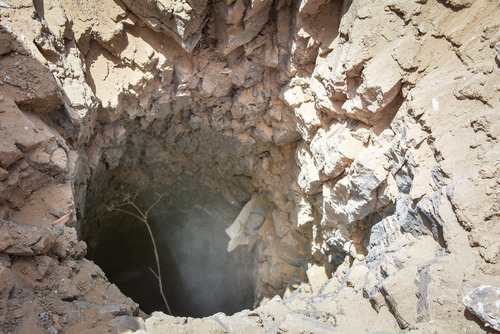
A Hamas terror tunnel. Photo: Israel Defense Forces.
The last time the BBC reported — albeit unsatisfactorily — on the issue of Hamas’ cross-border attack tunnels, was at the end of January when one of those tunnels caved in. Several additional instances of the collapse of these tunnels have since been reported, with the latest having occurred in the Khan Younis area.
A tunnel being dug in Gaza under the aegis of the ruling Hamas group collapsed on Thursday, killing a member of the organization’s military wing, Izz ad-Din al-Qassam Brigades, Hamas said.
The dead man was named as Muhammad Musa al Astal from Khan Younis.
The tunnel caved in near the city of Khan Younis in southern Gaza, the Izz ad-Din al-Qassam Brigades confirmed. It was the latest in a spate of such collapses. Only five days ago, another tunnel caved in near the Zeitoun neighborhood in the eastern part of the Strip, injuring five members of Hamas’s military wing.[…]
The past two months have seen seven tunnels collapse, most of them in the Khan Younis area, and two in Zeitoun.
Residents of Israeli communities near the border with the Gaza Strip have in recent months repeatedly reported hearing strange noises that they suspect are connected to Hamas’ efforts to rebuild its network of cross-border tunnels ,and the IDF has been examining those reports. Some Hamas operatives meanwhile appear to have invented their own conspiracy theories regarding that activity.
Official reports, both in Israel and Gaza, describe collapses caused by recent storms and heavy rains. However, among Hamas and others, there are many who believe Israel is responsible.
Hamas operatives have seen Israeli activities near the border fence against tunnels and fear they are connected to the tunnel collapses. Some of the activists have even spoken of the methods Israel is supposedly using to cause the collapses.
One operative claimed Israel is using liquid explosives, while another operative expressed fears of Israel’s ability to cause localized earthquakes, which could also collapse the tunnels.
Despite the fact that the BBC’s Jerusalem bureau staff could drive to the area in a couple of hours, audiences have yet to see an interview with any of the worried residents of Israeli communities along the border with the Gaza Strip and the corporation continues to avoid producing any significant reporting that would enhance audience understanding of an issue that is liable to lead to future conflict — and headlines.


