




Saudi Arabia Remains Committed to Arab Peace Initiative, FM Says After Israel-UAE Normalization Deal
Error: Contact form not found.

 by Reuters and Algemeiner Staff

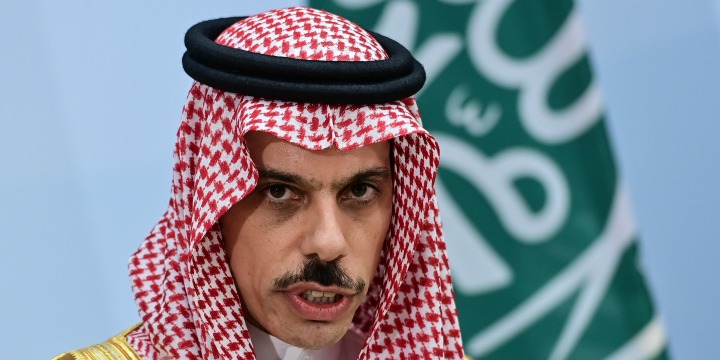
Saudi Foreign Minister Prince Faisal bin Farhan Al-Saud attends a joint news conference with German Foreign Minister Heiko Maas, in Berlin, Germany, Aug. 19, 2020. Photo: John Macdougall / Pool.
Saudi Arabia remains committed to peace with Israel on the basis of the longstanding Arab Peace Initiative, its foreign minister said on Wednesday, in the country’s first official comment since the United Arab Emirates agreed to normalize relations with Israel last week.
Israel and the UAE said on Thursday they would normalize diplomatic relations under a US-sponsored deal whose implementation could reshape Middle East politics from the Palestinian issue to the fight against Iran.
The Arab Peace Initiative was drawn up by Saudi Arabia in 2002, in which Arab nations offered Israel normalized ties in return for a statehood deal with the Palestinians and full Israeli withdrawal from territory captured in 1967.
“The kingdom considers any Israeli unilateral measures to annex Palestinian land as undermining the two-state solution,” Faisal bin Farhan Al-Saud said in an event in Berlin on Wednesday, in comments reported on Saudi’s Foreign Affairs Ministry Twitter page.
Saudi Arabia, birthplace of Islam and site of its holiest shrines, does not recognize Israel and its air space is closed to Israeli airliners.
The kingdom, a close US ally, has been ruled by 84-year-old King Salman since 2015, who has over the years repeatedly reassured Arab allies it will not endorse any Middle East peace plan that fails to address Jerusalem’s status or refugees’ right of return.
Saudi officials have repeatedly denied any difference between King Salman, and his son, Crown Prince Mohammed bin Salman, the kingdom’s de facto ruler and next in line to the throne, who has shaken up long-held policies on many issues and told a US magazine in April that Israelis are entitled to live peacefully on their own land.
Both Saudi Arabia and Israel view Iran as the major threat to the Middle East. Increased tension between Tehran and Riyadh has fueled speculation that shared interests may push the Saudis and Israel to work together, and there have been signs in recent years of some thawing between the two.


