








Israeli Businessman Sees Opportunity in Dubai’s Free Trade Zone
Error: Contact form not found.

 by CTech Staff

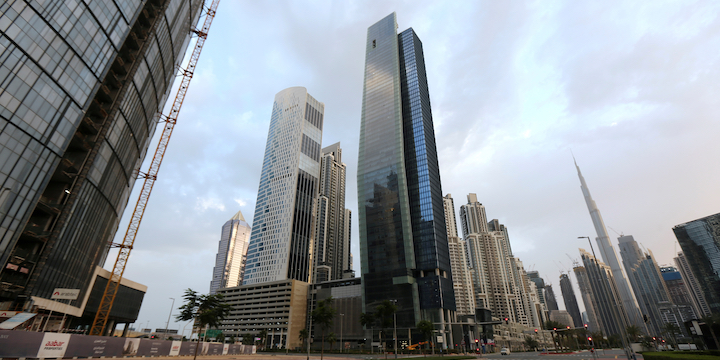
A general view of the Business Bay area, after a curfew was imposed to prevent the spread of the coronavirus disease (COVID-19), in Dubai, United Arab Emirates, March 28, 2020. Photo: Reuters / Satish Kumar / File.
CTech – There is great potential for Israeli businesses in goods manufactured in Dubai’s factories, according to Shlomi Fogel, co-owner of private shipbuilding company Israel Shipyards Ltd. and chairman of financing firm Ampa Capital Ltd.
Fogel spoke Wednesday with Calcalist reporter Zvi Zerahia as part of Calcalist’s online conference on the business potential the UAE presents for Israel.
Fogel attributed the potential to Dubai’s free trade zone, where businesses are exempt from paying income tax, VAT and corporate tax. The free trade zone is why most large multinational companies base their Middle Eastern presence in Dubai, Fogel said.
“There are a lot of goods being imported there and Dubai and Abu Dhabi serve as a logistical center and a bridge to Eastern Africa, Iran and every other country in the area, including Pakistan and Afghanistan,” he noted.
“We want to see everyone enjoying this process,” Fogel said, adding he believed the normalization between Israel and the United Arab Emirates (UAE) would be what would bring Israel back to the negotiating table with the Palestinians.
“They too understand that the economy is what drives everything,” he pointed out.
“If we can help, for example, export strawberries from Gaza or ship produce from the West Bank mixed together with Israeli produce ‐‐ maybe even include Jordanian goods ‐‐ there will be nothing to stop us from servicing the entire Persian Gulf,” Fogel said.
Fogel said he intended to put these words into action and set up a shipping route from Eilat’s harbor in southern Israel to Dubai’s Jebel Ali port that would pass through two additional ports.
The new route is intended to export mixed produce from Israel, the West Bank, and Gaza, he said.
“This is how we build a business: first comes trade, then investment, and then factories,” he added.
Prices in the Emirates are far lower than in Israel thanks to the free trade zones and low cost of labor, Fogel said, so, there is no doubt Israeli companies could purchase raw material for less there.
Fogel also believes Israeli merchants will soon set up their own factories in the UAE, once they recognize the business potential.
Fogel believes tech will benefit from the normalization agreement, as well.
“It is plain to see that the Emirati are looking for new technologies,” he said, “and are already investing in Israeli tech through third parties. Now, they could invest directly in the companies and this opens up great potential for Israeli tech. It is only a matter of time and we should make sure the process is simple and fast enough to facilitate safe investment.”


