



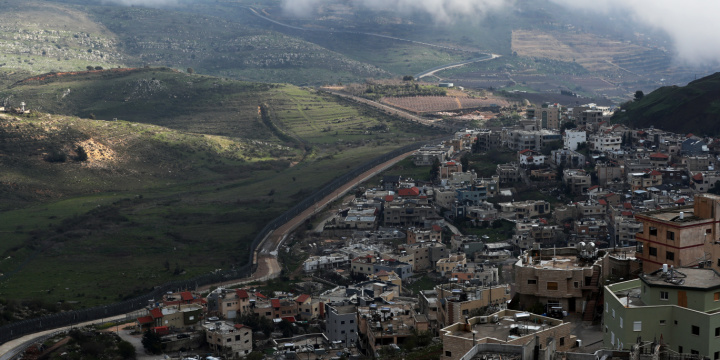
Nevertheless, it is clear that official recognition will come one of these days. Although it took nearly 40 years, then-U.S. President Donald Trump’s recognition of Israeli sovereignty over the Golan was the final seal of approval. The change in government and policies in Washington have not changed this, and have in fact validated the three-stage formula that sees Israel apply sovereignty in the first stage. In the second stage, the world becomes accustomed to and de-facto recognizes the new status. In the third stage, there is formal recognition of the move.
Interestingly, Israel has been less successful in an area where success seemingly should have been far easier to achieve: Judea and Samaria.
Fifty-four years since Israel liberated the Golan Heights from the Syrians and 40 years since Jerusalem officially annexed the region, the Jewish population there remains frighteningly tiny. The opposite situation prevails in Judea and Samaria: The Jewish presence there is significant, yet the imposition of Israeli sovereignty on the territory, at least the Jewish communities there, has stalled. That’s a shame.
The Golan Heights precedent teaches us that a confident and determined Israel can dictate its will, and the world will accept it sooner or later. Herein lies the central lesson for the future of Judea and Samaria. Historical justification is important: Dozens of ancient synagogues in the Golan Heights bear witness to this region belonging to the Jewish people. The international-law rationale for the move is important, as international law recognizes that the aggressor, i.e. the Arab states, must bear responsibility for their actions and could forfeit portions of their territory to the victim of their aggression.
It is, however, Israel’s action and willingness to impose sovereignty on a territory liberated in a defensive war that provides the most important explanation of all. It worked in the Golan Heights. It will work in Judea and Samaria.
Ariel Bulshtein is a journalist, translator, lecturer and lawyer.
This article first appeared in Israel Hayom.


