Jewish A Cappella Group Six13 Releases Billy Joel-Inspired Passover Parody
Error: Contact form not found.
by JNS.org

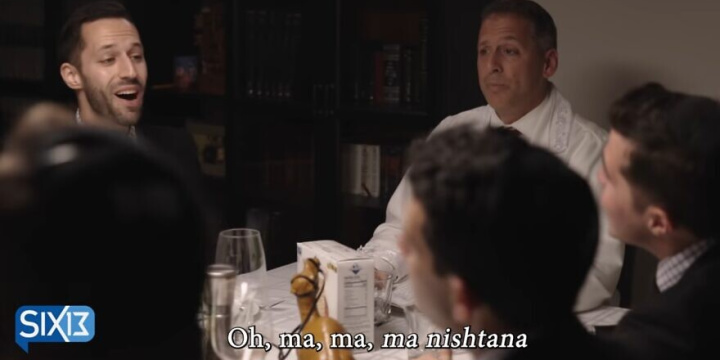
The Jewish a cappella group Six13 created a mash-up of classic tunes from Jewish musician Billy Joel. Photo: Screenshot.
JNS.org – The Jewish a cappella group Six13 created a mash-up of classic tunes from Jewish musician Billy Joel for their new Passover song, aptly titled “A Billy Joel Passover.”
The music video for the track begins with the group’s rendition of Joel’s “Piano Man,” which they turned into “Pharaoh Man.”
Joel’s “We Didn’t Start the Fire” was converted into “God Set a Bush on Fire” and “Scenes from an Italian Restaurant” was morphed into “Scenes from a Seder Night.” Joel’s popular song “Movin’ Out” is also included in the parody to help describe the story of the Jewish exodus from Egypt.
The video is shot around New York, which is the singer and Six13’s hometown, including in the subway and outside Madison Square Garden in Midtown Manhattan.
Trump Says Iran Agreed to Nuclear Inspections Into ‘Infinity,’ Tehran Denies US Claims
New Lebanon-Israel Talks Begin in Shadow of US-Iran Deal
From Political Disagreement to Moral Accusation: Mamdani’s Dangerous Rhetoric
The Haredim Should Serve — and They Are Still My Brothers
The New York Times Accidentally Got Iran Right
New Lebanon ‘Deconfliction’ Mechanism Seems to Exclude Israel, Sparks Anger in Jerusalem
Gunman Opens Fire in Heart of Montreal’s Jewish Community, Killing Police Officer and Rabbi
Italian Mayor Receives Bullet-Laced Death Threat Over Growing Israeli Community in Northern Town
Trump Allies Defend Him to Israelis Anxious Over Iran Deal
Vance Delivers Upbeat Assessment of US-Iran Talks in Switzerland


Gunman Opens Fire in Heart of Montreal’s Jewish Community, Killing Police Officer and Rabbi
Italian Mayor Receives Bullet-Laced Death Threat Over Growing Israeli Community in Northern Town
New Lebanon ‘Deconfliction’ Mechanism Seems to Exclude Israel, Sparks Anger in Jerusalem
The Haredim Should Serve — and They Are Still My Brothers
From Political Disagreement to Moral Accusation: Mamdani’s Dangerous Rhetoric