






The World Needs a ‘Day After’ Plan — for the West Bank
Error: Contact form not found.

 by Joel M. Margolis


Palestinian President Mahmoud Abbas appoints Mohammad Mustafa as prime minister of the Palestinian Authority (PA), in Ramallah, in the West Bank March 14, 2024 in this handout image. Photo: Palestinian president office/Handout via REUTERS/File Photo
Discussions of the “day after” in Gaza overlook the equally important issue of the day after in the West Bank (referred to by Israel as Judea and Samaria). The Palestinian government in the West Bank is headed for upheaval.
Palestinian Authority President Mahmoud Abbas was elected in 2005 to serve a four-year term but still clings to power 20 years later without authority. This longstanding disregard of democracy has undermined the PA’s legitimacy in two respects. First, the PA cannot credibly claim to represent the Palestinian people. Second, the refusal to hold elections violates the Israeli-Palestinian Oslo Accords of 1993, which created the PA as an interim Palestinian body that would end Palestinian terrorism and promote Palestinian human development in areas such as health, education, and policing.
The unelected PA — along with its controlling Fatah party — are widely regarded by Palestinians as corrupt, inept, and oblivious. Disturbingly, it is Fatah’s rival, the Hamas terrorist organization, that is more respected among Palestinians in both the West Bank and Gaza.
Although Hamas ignores the demands of human development in favor of its ongoing war of terror against Israel, Hamas’s Oct. 7, 2023 invasion of Israel has only driven the terror group’s popularity to new heights. In 2006, the last time the PA held elections, Hamas won a majority of seats in the legislature, but Fatah ignored the outcome. The next year, Hamas violently ousted the PA’s Fatah representatives from Gaza. As a result, the PA has no control over Gaza — and has evidenced no intention of holding elections in the West Bank, likely because the vote would favor Hamas.
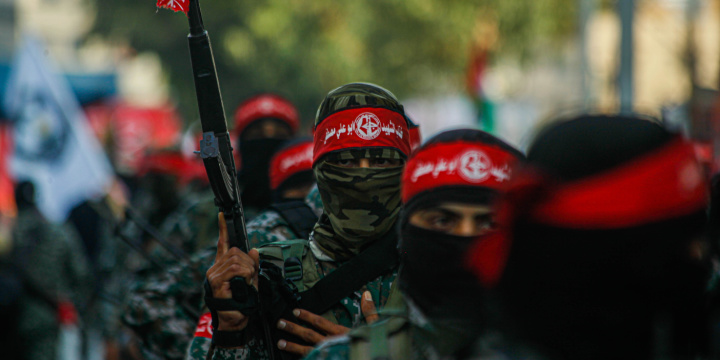
Hamas also enjoys a military edge over Fatah, thanks in part to a torrent of weapons that has been smuggled into the West Bank, where the terror group has many operatives, from Iran at an accelerated pace. The weapons not only help Hamas and related terror groups defy the PA but also enable them to wage vastly more terrorist attacks on Israelis. Terror cells in the West Bank and Jerusalem attempted fewer than 400 terror attacks in 2021 and fewer than 500 in 2022 but over 1,000 in 2023 and over 1,000 again in 2024. Meanwhile, pursuant to the recent Hamas-Israel ceasefire agreement in Gaza, Israel has begun to free what could ultimately be thousands of convicted Palestinian terrorists, some of whom are Hamas loyalists returning to the West Bank.
The PA has tried to combat the West Bank terror cells without obstructing their attacks on Israel, but the strategy has failed.
Compounding the PA’s predicament, Abbas is 89 years old and in poor health. His supposed successor is considered a mere placeholder with no political backing.
Given these circumstances, Hamas could launch an insurrection in the West Bank similar to the violence it inflicted to evict the PA from Gaza. Even without a PA regime change, the ongoing escalation in West Bank-originated terror attacks could well culminate in another Oct. 7-style invasion, as Hamas itself has already warned.
Until this year, Israel has propped up the PA to preserve the scaffolding of the Oslo Accords and avoid the rise of more extreme West Bank Palestinian elements. Now it appears the extremist nightmare is coming true.
Faced with this existential threat, Israel’s options are limited. It cannot force Palestinians to elect a new PA, renounce terrorism, or prioritize their Oslo-enshrined human development tasks. Nor can it afford to wait and see if Abbas is replaced by someone better. Israel is struggling to survive a prolonged seven-front war with unpredictable support from the US and opposition from world bodies such as the UN.
Fortunately, Israel benefits from two sources of lawful self-defense. One is Article 51 of the UN Charter. Under Article 51, Israel may use military force in Gaza and the West Bank to repel armed attacks against Israelis within the Green Line such as occurred on Oct. 7, 2023. In addition, a section of the Oslo Accords titled Arrangements for Security and Public Order authorizes Israel to use “all the powers … necessary” to protect the 500,000 Israelis living in the West Bank.
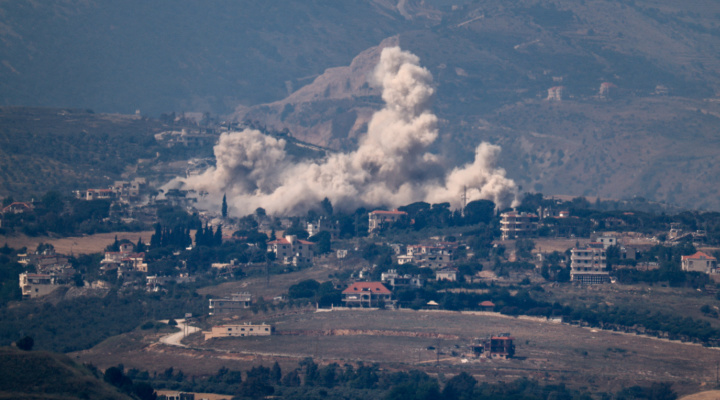
The above provisions clearly validate Israel’s plan to build a security barrier along its border with Jordan to help prevent weapons smuggling. These provisions also permit the new strategy of deterrence Israel has unveiled in the West Bank town of Jenin. In the Jenin mission, called Operation Iron Wall, the Israel Defense Force aims to eliminate a terrorist stronghold rather than merely reduce the number and lethality of its terror attacks. Operation Iron Wall is characterized by larger contingents of IDF troops, deeper incursions into enemy territory, longer lasting surgical raids, and more intensive firepower, including air strikes and tank rounds.
By neglecting the Oslo Accords, the PA has deprived its people of a legitimate leadership committed to disarming terrorists and serving Palestinian needs. An all-out war between Hamas and Fatah, which appears increasingly likely, may expose Palestinian civilians to terrorist attacks by Hamas and to harm from Israel’s legitimate responsive efforts to thwart those attacks. Whether or not Hamas overpowers the PA, if the militants batter Israel with another Oct. 7 attack, the West Bank may be left looking like Gaza.
The international community, and in particular moderate Arab states, should intervene to stop the Palestinian train wreck before it’s too late.
Joel M. Margolis is the Legal Commentator, American Association of Jewish Lawyers and Jurists, US Affiliate of the International Association of Jewish Lawyers and Jurists. His 2001 book, The Israeli-Palestinian Legal War, analyzed the major legal issues in the Israeli-Palestinian conflict. Previously he worked as a telecommunications lawyer in both the public and private sectors.