





The ‘Palestinian Village’ of Susya is Neither Palestinian Nor a Village
Error: Contact form not found.

 by Adam Levick

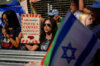
Take a look at this recent photo published in the Financial Times.

Financial Times screenshot. Photo: UK Media Watch.
The photo is quite representative of U.K. media coverage of events in a place they’re calling “Khirbet Susya.” This area is near the Jewish settlement of Susya – a historically Jewish town in the southern Hebron hills.
The Guardian, Independent, and Telegraph have all covered the story, which has been framed as an attempt by Israeli authorities to kick hundreds of Palestinians off ‘their land’ in this “Palestinian village”.
Much like the FT’s characterization of the EU-funded concrete structure covered by tarp in the staged photo as a “tent” (look at the concrete by the girl’s feet), the claim that the area is “Palestinian” and owned by local “villagers” is – according to courts who examined claims by the petitioners (the Nawajah family) – fictitious.
Based on historical and geographical accounts, aerial photography, mandatory-era maps, travelogues, and the population registry, Israeli courts (HC 7530/01, 430/12, 1556/12, 1420/14) established that no such Palestinian village ever existed. According to the NGO Regavim and the Israel Ministry of Foreign Affairs (MFA), only a handful of families resided there since the 1980s, and it only ever served as temporary (seasonal) grazing land by Palestinian shepherds.
Further, claims by the Nawajah family that they owned the land was also disproven, and the court found that the family owned a permanent residence in Yatta, in Palestinian-controlled Area A.
Additionally, the 20 illegal structures in the encampment built adjacent to an ancient Jewish archeological site represents part of a broader attempt by the EU, the PA, and pro-Palestinian NGOs to establish ‘facts on the ground’ in Area C.
Jack Wallis Simons wrote this in his fascinating Daily Mail expose earlier in the year:
More than 400 EU-funded Palestinian homes have been erected in Area C of the West Bank, which was placed under Israeli jurisdiction during the Oslo Accords – a part of international law to which the EU is a signatory.
The Palestinian buildings, which have no permits, come at a cost of tens of millions of Euros in public money, a proportion of which comes from the British taxpayer.
This has raised concerns that the EU is using valuable resources to take sides in a foreign territorial dispute.
Finally, the charge that, if the Palestinian petitioners lose the case, they will be rendered homeless is also not true, according to the MFA:
[They] have been offered plots of similar, or even better, quality in a nearby area that already conforms to planning and zoning laws. Building houses there will also improve the petitioners’ quality of life, giving them access to infrastructure and educational facilities that are not available in their current illegal locations. Additionally, they will be allowed to continue the same agricultural activities on the lands they currently claim.
Susya is neither “Palestinian” nor a “village.” It can more accurately be described – to use the parlance of foreign journalists when reporting on Jews in similar situations in the West Bank – as an illegal Palestinian settlement.
Adam Levick is the managing editor of UK Media Watch, an affiliate of the Committee for Accuracy in Middle East Reporting in America (CAMERA).


