








A Brookings Fellow Gives a ‘Neutral’ Briefing to BDS Leaders
Error: Contact form not found.

 by Steven Emerson

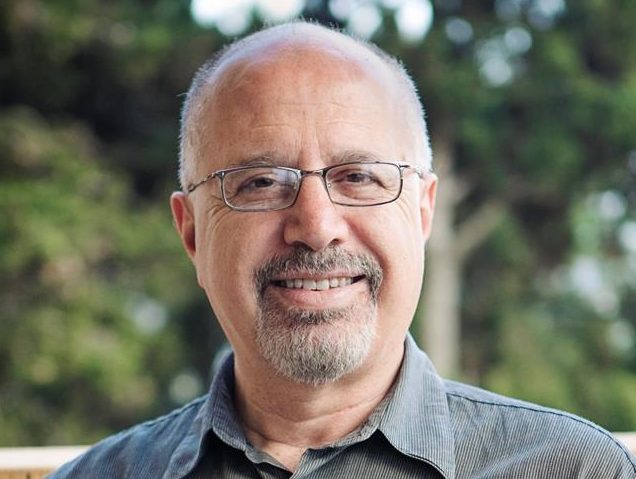
Shibley Telhami. Photo: Facebook.
On Sunday, a high-profile Brookings Institution senior fellow participated in a national gathering outside of Washington, DC, for an anti-Israel group — the US Campaign to End the Occupation — that supports boycotts and economic divestment from the Jewish state.
In addition to his role with Brookings, Shibley Telhami is the University of Maryland’s Anwar Sadat Professor for Peace and Development.
In 2014, the Investigative Project on Terrorism examined the Brookings Institution’s close ties with Qatar, a terror-supporting Gulf state that has given the think tank millions of dollars over the years. Brookings, in turn, routinely gives voice and legitimacy to radical Islamists, including those who advocate for Hamas, and hedges on censorship and blasphemy law campaigns by Muslim countries that are part of the Organization of Islamic Cooperation.
In his comments on Sunday, Telhami made no endorsement of the Boycott, Divestment and Sanctions (BDS) campaign, but summarized polling he conducted during the past year on American attitudes to US policy on the Israeli-Palestinian conflict.
Increasingly, he said, there’s a partisan divide, with data showing Democrats are more likely to want the US to be even-handed about Israel, rather than favor it. When it comes to United Nations votes on establishing a Palestinian state, 53 percent of Republicans want the United States to continue voting against it. But only 19% of Democrats would want the US to vote against it.
He also said that more than 80% of Democrats say they favor Israel’s democracy over its status as a Jewish state; a majority of Republicans, 57%, agree.
Telhami does not ask specific questions about BDS in his polls, he said in a December interview.
Though Telhami took no position on the conference, his presence bestowed legitimacy upon the group and its mission, which includes isolating Israel politically and economically by pushing for a boycott of Israeli products, and pressuring corporations and universities to divest from companies doing business in Israel.
The US Campaign remains silent about Hamas’ rejection of any peaceful settlement to the conflict, a position established in its antisemitic charter, which also calls for Israel’s annihilation. Hamas officials continually reiterate that position.
The US Campaign also ignores provocations by Hamas, including its policy of diverting supplies and money that could be used to improve life for Palestinians in Gaza in order to build attack tunnels into Israel, and to rebuild its rocket arsenal in preparation for future conflict.
The organization also ignores offers to create a Palestinian state that were rejected by the late Palestinian Authority leader Yasser Arafat in 2000 and PA President Mahmoud Abbas in 2008. The latter offer included a near total withdrawal from the West Bank and the elimination of Israeli control over east Jerusalem, including the Old City, which would have been given to an international authority.
This one-sided approach prompted the United Methodist Church to withdraw from the US Campaign to End the Israeli Occupation last May. “Blaming only one side while ignoring the wrongdoing of Hamas, Hezbollah and Iran will not advance the cause of peace,” the Methodist petition said.
The campaign’s executive director, Yousef Munayyer, hosted Telhami’s panel.
Munayyer is a buttoned-down, reasonable-sounding apologist for Hamas.
After a contentious appearance on Fox News during the 2014 Gaza war, Munayyer said,”Hamas is a resistance movement that has used tactics that we all agree are terror tactics. But they’re not only a terrorist organization; they’re a resistance movement, they’re a political organization, they’re a social services organization, and I don’t agree with the use of the word ‘terrorism’ to just hijack conversations.”
Last week, Munayyer warned his Twitter followers that the periods just before US elections are used by Israel as cover to launch unjust attacks against Palestinians in Gaza. In doing so, he ignored the thousands of rockets Hamas has launched into Israeli civilian communities, and their role in triggering conflicts in late 2008 and during the summer of 2014.
Telhami’s polling can be useful for people on all sides who may be passionate about the issue. But his decision Sunday to give legitimacy to a group that despises Israel was a flawed one. A poll among the United Methodist Church earlier this year made that clear.
Steven Emerson is the Executive Director the Investigative Project on Terrorism (www.investigativeproject.org) where this article first appeared.


