



Official: US Considering Additional Iran Sanctions, Perhaps in May
Error: Contact form not found.

 by Reuters and Algemeiner Staff

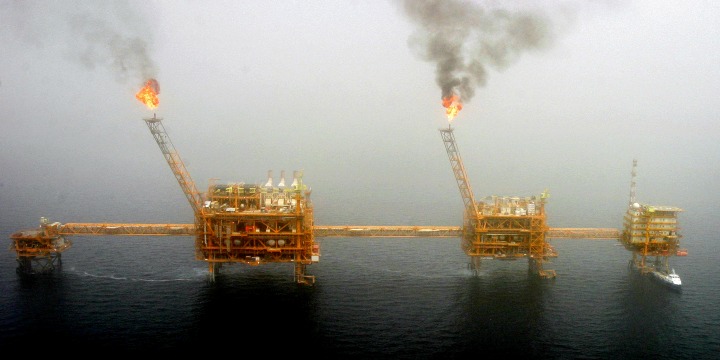
Gas flares from an oil production platform at the Soroush oil fields in the Gulf, July 25, 2005. Photo: Reuters / Raheb Homavandi / File.
The US government is considering additional sanctions against Iran that would target areas of its economy that have not been hit before, a senior Trump administration official told reporters on Monday.
The official said the administration aimed to follow through with new sanctions around the first anniversary of the US withdrawal from a 2015 nuclear deal between Iran and several world powers, which President Donald Trump announced last May.
“We just want a continued chilling effect,” the official said. “We want businesses to continue to think doing business with Iran is a terrible idea at this point.”
Trump announced last May that the United States would pull out of a 2015 international agreement designed to deny Tehran the ability to make nuclear weapons and he ordered sanctions be imposed again on the country.
The deal, agreed by the United States, France, Britain, Germany, Russia, China and Iran, sought to prevent Iran from developing a nuclear bomb in return for the removal of sanctions that had crippled its economy.
The official, speaking on condition of anonymity, said the administration hoped to take the additional measures in the coming weeks.
“The more we can do around the anniversary, the better,” the official said, while adding that it takes time to put such sanctions together and that the US Treasury Department was working on them.
One of the tools the United States has employed includes sanctions on oil imports from Iran. Washington has granted waivers to eight Iranian oil buyers, but could change that.
The official said the United States had the ability not to give those waivers at all. “That, I think, is where we’re headed,” the official said.
Reducing the number of waivers would limit oil exports from Iran, the fourth-largest producer in OPEC. The United States set an earlier target of driving Iranian oil exports to zero, and the official said that goal had not changed.
US domestic oil production would help offset such a change, the official said.
China, India, Japan, South Korea and Turkey are likely to be given waivers after they expire in May that could cap Iran’s crude oil exports at about 1.1 million barrels per day, US-based analysts at Eurasia Group said earlier this year. That would remove Italy, Greece and Taiwan from the current waivers list.