







Muslims Stand With Jews at Buchenwald
Error: Contact form not found.

 by Richard L. Benkin

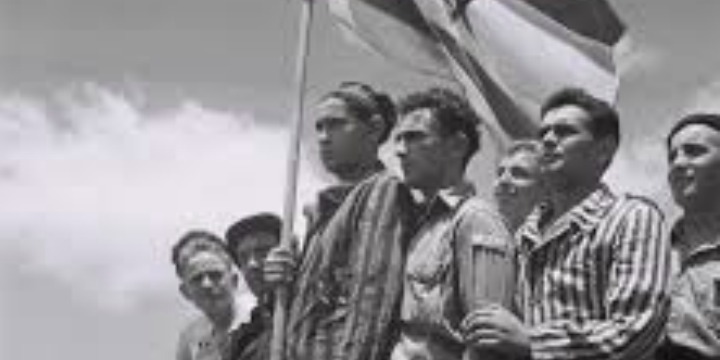
Survivors of the Buchenwald concentration camp arrive in Israel in 1945. Photo: Wikimedia Commons.
While antisemitism is on the rise in the West, it’s declining in the East. In Bangladesh’s capital, people urged me to convince their government to recognize Israel. Indians were standing in line for me to arrange visits to Israel.
In Germany, while with Pashtun Muslims living in exile from Pakistan, I decided to say kaddish for a relative, Leon Gross, who was interned in Buchenwald. My Pashtun friends wanted to stand with me — so they accompanied me there.
This wasn’t just another Nazi concentration camp visit to show that not all Muslims are Holocaust deniers. While Pashtuns have not experienced the industrialized genocide my family did, all can name relatives killed and villages destroyed by the Pakistani military and their Taliban allies merely because they were Pashtun. What happened in the Holocaust resonated with them, so they wanted to be there.
Pashtuns are Muslims from Afghanistan and the bordering territory occupied by Pakistan. They trace their origins to Israel’s Ten Lost Tribes, and see modern Israel as a model for re-gaining their own ancestral homeland in spite of constant attacks. Others derisively call them “Yehudi,” but it’s a moniker most wear with pride. Forcibly incorporated into Pakistan in 1947, they face human rights atrocities and cultural oppression, and are fighting back. Last year, they attacked a Taliban office and commander in a little-reported battle, hoping the free world would take notice.
Because Buchenwald was not a killing center, like Auschwitz, it held Aryans as well as Jews: political prisoners, criminals, and other “social undesirables.” So when Mackenzie Lake from the camp museum talked about non-Jewish prisoners’ reaction to transports of Jewish children, it had an impact. The victims’ crime was being Jewish, just as the crime of Pakistan’s victims today is being Pashtun.
Comparing other persecutions with the Shoah dishonors Shoah victims, and denies the unique horror that the Nazis perpetrated. As they learned about the concentration camp system and the Shoah’s methods and goals, however, these Muslims in Buchenwald became even more convinced that the Holocaust remains distinct.
One of my friends, Afridi Rehman Fazal Ur, who works at the UN and supports the fight against anti-Israel bias, called the visit “emotional and historical.”


