







The Effects of Coronavirus on Israel’s Tech Sector Will Be Minimal, Says Highroad Managing Partner
Error: Contact form not found.

 by CTech Staff

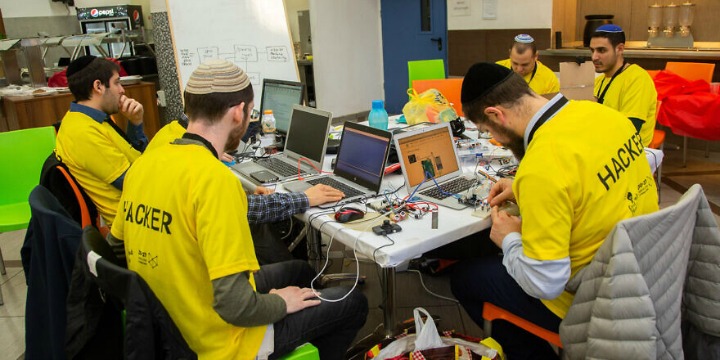
Hard at work during the fourth annual Jerusalem College of Technology (Machon Lev) “Great Minds Hackathon,” December 2019. Photo: Michael Erenburg.
CTech – Attempts to evaluate the scope of the damages caused to different industries by the coronavirus (Covid-19) pandemic are limited, but according to Eyal Hoffman, managing partner at Highroad, an innovation center and startup launchpad focused on urban tech, the effects on the Israeli tech sector will be minimal.
On Monday, Hoffman answered six questions about the crisis and its effects on the Israeli tech sector.
How is your organization addressing the recent government directives?
While we are pretty prepared for working remotely, the nature of our day-to-day activities means we are affected; we support our companies with ongoing meetings with mentors and experts, content days, workshops, etc. All of those do continue but needed to be adapted.
At the end of each cohort, we also produce a demo day called the Highroad Show, which was set to take place in May, but we needed to find other ways to do that. At the moment it is planned to be a remote event, and we have thought of some new and creative ideas to incorporate into the online event.
In what ways do you expect the corona crisis to impact your organization in the coming months?
I assume some things will be canceled, but most of the activity will probably be shifted to remote activity, including daily working time, as well as meetings and events. Unfortunately, I think we will also see a slowdown in the entire industry, though the startup sector will suffer the least impact since they are, in most cases, more prepared to work anywhere, anytime.
How do you see the corona crisis impacting the Israeli tech sector?
I think that the Israeli tech sector will be one of the sectors that will be impacted the least from this crisis, especially in the long run, since it is fundamentally more flexible, and the state of mind of tech workers is also flexible.
As sad as it is, some sectors will suffer severely from the situation and might also collapse, but there might be an upside. I see an opportunity for the tech sector to assist those industries using technological solutions, especially in sectors that previously were more reluctant to receive different types of technological advancements.
What can be done to minimize the damage?
That is a difficult question since the damage itself is hard to predict. The most important thing is to keep business as usual as much as it is technically — and technologically — possible. The rest is speculations and things we cannot affect.
What are the top three rules to follow to endure the crisis?
1. People come first
2. See the opportunities within the situation
3. Business as usual
Do you believe the coronavirus pandemic will have a lasting impact on social, economic, and cultural norms?
Yes, I believe that the longer this situation lasts, the more people get used to this type of living, in terms of interactions, both business and social, work, consumption, etc. Again, this is more of an opportunity rather than a disadvantage in my opinion. It is fertile ground to disrupt some yet-undisrupted aspects of our everyday lives. This also has a strong connection to Highroad’s vision, which is to redesign the daily lives of all of us, wherever this disruption is able to improve people’s lives. That’s a difficult mission, but hard times are also an opportunity for big positive changes, and we must see how we do it right.